
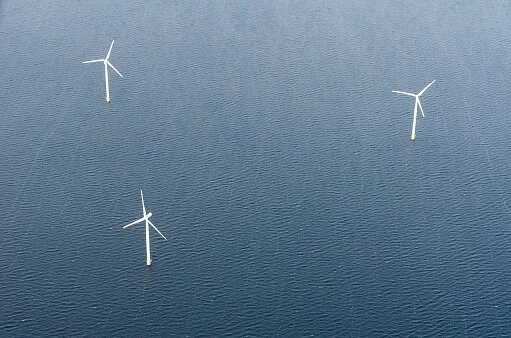
Forbes: Offshore Wind Is Likely The Next Big U.S. Renewable Sector
At this moment, 30 megawatts of offshore wind turbines are sending power to Narraganset Electric, the National Grid affiliate serving Rhode Island. They are the only offshore turbines in operation in the U.S., a pittance considering Europe is closing in on 20,000 MW in operation.
July 30, 2018 12:00 am
By Andrew Vitelli
At this moment, 30 megawatts of offshore wind turbines are sending power to Narraganset Electric, the National Grid affiliate serving Rhode Island. They are the only offshore turbines in operation in the U.S., a pittance considering Europe is closing in on 20,000 MW in operation.
But in the U.S. renewable sector, offshore wind is generating increasing excitement. Between dropping costs, ambitious state renewable targets, and a host of European developers looking to bring their knowledge stateside, the long-awaited U.S. offshore wind surge is now widely seen as imminent.
“The U.S. will certainly take advantage of the path already traveled by the EU offshore market and will be in a position to catch up in just a few years,” said Alejandro de Hoz, the vice president of U.S. offshore for Avangrid Renewables.
Offshore wind development is especially crucial in the Northeast. Blue states like New York, New Jersey and Massachusetts are looking to up their clean energy usage, which entails using wind and solar to power cities near the coast. But the abundant land needed for onshore wind and solar farms is difficult to find near population centers while piping power long distances is inefficient. Besides, New York has neither the wind resource of Texas nor the solar intensity of California.
The Northeast does have an advantage when it comes to offshore wind. Ocean depth off the East Coast is relatively shallow, in some areas roughly 30 meters or less. Installing offshore wind turbines becomes more challenging the deeper the water, and is not viable beyond roughly 60 meters.
Over 10,000 MW of projects are in various stages of development along the East Coast. Of the large utility-scale sites in the pipeline, Vineyard Wind may be the closest to operation. The 800 MW project, a joint venture of Avangrid and Copenhagen Infrastructure Partners, was picked by Massachusetts for the right to negotiate a power purchase agreement and may be operational by 2021. Several more sites won’t be far behind.
When offshore wind debuted in Europe roughly a decade ago, it was an unproven technology and banks remained wary. The first deals required 50% equity backing. Investors have grown comfortable, with some deals now hitting 80% leverage.
In the U.S., new challenges emerge. The biggest difference between the continents is the knowledge base that has been built up in Europe. Ranjan Moulik, the global head of power and renewables at the French investment bank Natixis, said developers should find teams and individuals who successfully developed projects in Europe and “get them on a flight to the U.S.” American and European firms have teamed up for projects or development platforms, including Vineyard Wind and the 400-800 MW Bay State Wind project off Massachusetts developed by Denmark’s Ørsted and New England’s Eversource. Even if the expertise turns out to be transferable, the U.S. will still need to develop its own supply chain and deal with issues unique to the country. This includes the Jones Act, which requires goods traveling between U.S. ports to be shipped by U.S.-owned and operated vessels.
From the financing side, the centrality of tax equity contrasts with European government incentives. Feed-in tariffs and Contracts for Difference – subsidy schemes to limit exposure to pure market risk – helped jump-start the European market. Monetizing tax equity – particularly the quantity needed for offshore wind – is more complicated, which could scare some European lenders.
“But the industry has got the depth and experience to handle it,” said David Burton, the head of Mayer Brown’s renewable energy practice in New York. “It will get done.”
The West Coast is also beginning to see some interest, including a 650-1000MW proposed project off Morro Bay, California. Given the greater seabed depth, development in the Pacific would require advancements in technology of floating turbines that are not fixed into the ocean floor. This technology, however, is not as far along. The 30MW Hywind wind farm in Scotland is currently the world’s largest floating wind farm.
Andrew Vitelli is a New York-based reporter covering renewable energy for SparkSpread and Inframation News. His e-mail address is Andrew.vitelli@acuris.com.

Cape Cod Times: Powerful Incentive
Vineyard Wind, which has yet to set up an ocean-based turbine, has recently come under intense scrutiny by some in the town of Yarmouth, not for the wind power that they hope to generate, but because of a power cable that would carry that energy to the mainland. Although there are legitimate questions about the construction and path of this conduit, a number of residents have instead adopted a tone of hysteria and panic rather than calm and rational discussion, an approach that serves no one well.
July 28, 2018 2:00 pm
Opinion: Powerful incentive
Vineyard Wind, which has yet to set up an ocean-based turbine, has recently come under intense scrutiny by some in the town of Yarmouth, not for the wind power that they hope to generate, but because of a power cable that would carry that energy to the mainland. Although there are legitimate questions about the construction and path of this conduit, a number of residents have instead adopted a tone of hysteria and panic rather than calm and rational discussion, an approach that serves no one well.
Lewis Bay is a picturesque body of water that provides those who live near it with spectacular views as well as recreational access to Nantucket Sound. It offers a sustainable – although admittedly disrupted – habitat to a variety of plants and animals, and is a strong draw among visitors to the area. It was also on the short list of possible landfall sites for Vineyard Wind due to a variety of factors, not the least of which was the fact that it represents a shorter distance – and therefore cost savings – over some of the competing sites.
None of this has assuaged the opinions of a small but vocal segment of Yarmouth voters who seem intent of wielding hyperbole rather than facts as they work to sink this proposal. Last week, some of them showed up at an open meeting to discuss the project. To hear some of them describe it, Lewis Bay represents a pristine, undisturbed nature reserve rather than a busy harbor that plays host to regular ferry visits, hundreds of moorings, and nearly a thousand shellfishing licenses.
Other speakers sought to challenge the path of the cable’s route after it reaches the shore. As proposed, the cable would travel up Berry Avenue and Higgins Crowell Road before passing under Willow Street. It would then follow the railroad bed into Barnstable. Much of the cable would pass along existing rights-of-way. This prompted the argument that such work could potentially pollute town water supplies or negatively impact the ability of emergency vehicles to exit the Yarmouth Police Department. This is, of course, outlandish. Consider this: How often do residents challenge any other utility on these grounds when companies seek to dig up roads for electric, natural gas, cable, or phone work?
Some of these same critics have railed against the effect that laying an underwater cable could have on the floor of Lewis Bay, but others have pointed out that a dredge of the bay, which virtually no one ever challenges, causes far more disruption to the sea life that calls it home.
The bay has also seen its own set of noncable-related challenges in recent years, as nitrogen loading issues have threatened the overall health and water quality of the bay. Some have made the argument that a portion of the millions of dollars that the town could potentially reap as a landfall site could be poured back into the bay to help offset the years of nitrogen loading caused by septic systems that crowd the bay. Vineyard Wind representatives initially proposed a $1 million initial payment to the town, followed by annual payments of $450,000 for the next 25 years, although a final deal has yet to be presented.
It is worth noting that selectmen have not yet decided whether to enter into an agreement with Vineyard Wind in connection with the project. Perhaps even more important to Yarmouth residents is the fact that Vineyard Wind need not enter into any agreement with the town for this project to move forward; ultimately, the state will have the final say over whether such a cable landfall takes place.
That is not to say that Yarmouth has to embrace the cable; residents and public officials could do a lot that would make such a move less palatable to Vineyard Wind. But doesn’t it make more sense to secure the best deal possible for the town as a whole and make sure concerns are addressed in a constructive manner rather than throw up specious arguments?
Many of the critics of the plan are the first to say that they have nothing but the highest regard for wind power and green energy in general, echoing the words and attitudes of who over the years have sung the praises of affordable housing – just so long as it was not proposed anywhere near where they lived. It is time to put such false arguments aside, and for constructive rather than convoluted discussion to carry the day.
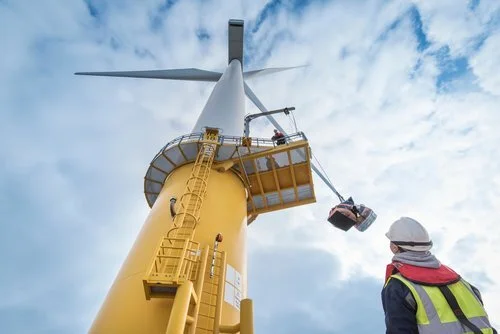
Commonwealth Selects Vineyard Wind as Preferred Solution in Clean Energy Solicitation
New Bedford – Vineyard Wind, which seeks to build the first large-scale offshore wind farm in the United States, released the following statement in response to today’s announcement by the Massachusetts Electric Distribution Companies (EDCs) that the company’s proposed 800 megawatt (MW) wind farm and electricity transmission project will advance as a preferred solution in the Massachusetts Green Communities Act Section 83C RFP for offshore wind energy projects.
MAY 23, 2018 01:40 PM | BY CAPECODTODAY STAFF
New Bedford – Vineyard Wind, which seeks to build the first large-scale offshore wind farm in the United States, released the following statement in response to today’s announcement by the Massachusetts Electric Distribution Companies (EDCs) that the company’s proposed 800 megawatt (MW) wind farm and electricity transmission project will advance as a preferred solution in the Massachusetts Green Communities Act Section 83C RFP for offshore wind energy projects.
“Vineyard Wind is proud to be selected to lead the new Massachusetts offshore wind industry into the future,” said Lars Thaaning Pedersen, CEO of Vineyard Wind. “Today’s announcement reflects the strong commitment to clean energy by Governor Baker and the Massachusetts Legislature. We are grateful for the time and commitment shown by many stakeholders, including Secretary of Energy and Environmental Affairs Matthew Beaton and Massachusetts Department of Energy Resources Commissioner Judith Judson. All parties successfully guided the state’s electric distribution companies in carrying forth the requirements of a clean energy law that assures significant benefits for every resident in Massachusetts. We look forward to working with the Commonwealth, the communities of the Cape, Islands, and South Coast, and all stakeholders in together fully realizing the enormous opportunity of offshore wind.”
Vineyard Wind is a joint venture of Avangrid Renewables, a subsidiary of AVANGRID Inc. (NYSE:AGR) which is majority owned by Iberdrola S.A., and Copenhagen Infrastructure Partners (CIP) each of which own 50 percent of Vineyard Wind.
“Vineyard Wind’s partners are eager to deliver an offshore wind project that will provide the Commonwealth with abundant clean energy resources for decades to come,” said Laura Beane, President and CEO of Avangrid Renewables. “Today’s announcement serves to further illustrate the AVANGRID companies’ commitment to deliver value and opportunity in a region that is determined to address complex energy challenges through significant investments in clean energy infrastructure. Avangrid Renewables is excited to play a substantial role in the Vineyard Wind joint venture, which is poised to support hundreds of Operations and Maintenance jobs and create thousands of construction jobs while launching an exciting new industry in Massachusetts.”
“The Vineyard Wind team is honored to be chosen to provide clean wind energy for communities across Massachusetts,” said Torsten Lodberg Smed, Senior Partner with Copenhagen Infrastructure Partners. “CIP is committed to continue to move forward with our plan to make Vineyard Wind the first operational large-scale offshore wind project in the United States. Backed by the proven global leadership of our joint venture partners in the global and domestic offshore wind sector across three continents, our team will deliver a utility-scale offshore wind project that will stimulate tremendous economic development opportunity on Cape Cod, the Islands and the South Coast.”
Under Massachusetts law, the selection of Vineyard Wind by the EDCs and Department of Energy Resources (DOER) allows all parties to begin negotiations to secure all necessary transmission services and power purchase agreements to facilitate the delivery of offshore wind electricity to Massachusetts customers. Once satisfactory contract terms are secured, those documents will be submitted to the Massachusetts Department of Public Utilities for formal review as set forth in the in the 83C process.
Vineyard Wind is the only offshore wind farm developer to begin both the state and federal permitting processes by filing an Environmental Notification Form (ENF) and Construction and Operations plan in December 2017. Vineyard Wind’s early timeline was designed to maximize the abundant environmental, economic and energy benefits associated with utility-scale wind energy for Bay State residents and businesses. Vineyard Wind will continue to refine the project design and approach as it receives additional comments from regulators and stakeholders. Vineyard Wind received a significant volume of substantive and productive comments from the fishing industry, residents on Cape Cod and the Islands, environmental organizations, as well as regional economic and community-based stakeholders, during the initial ENF comment period.
Vineyard Wind has been especially focused on receiving input from the fishing industry and has already held more than 100 meetings with fishermen or fishing organizations since 2016. Input from those meetings is reflected within the project design as part of a broad-based effort to ensure that offshore wind facilities and the fishing sector thrive together in the decades ahead.
With passage of An Act to Promote Energy Diversity in 2016, Massachusetts required the state’s EDCs to procure 1,600 megawatts (MW) of clean, offshore wind energy within the next decade, resulting in intense competition among offshore wind lease holders for long-term contracts with utilities in Massachusetts. The addition of 1,600 MW of low-carbon wind generation capacity will provide enough clean, homegrown energy to power the equivalent of more than 750,000 Massachusetts homes every year.
Vineyard Wind recently took another significant step in its effort to build the first large-scale offshore wind farm in the United States by submitting the project’s Draft Environmental Impact Report (DEIR) with state regulators. The filing advances the company’s proposal to construct an 800-megawatt (MW) wind farm 15 miles south of Martha’s Vineyard while maintaining Vineyard Wind’s early timetable to begin construction in 2019 and become operational by 2021. When completed, the Vineyard Wind project will reduce Massachusetts’ carbon emissions by over 1.6 million tons per year, the equivalent of removing 325,000 cars from state roads.
Vineyard Wind’s proposal committed $15 million to three initiatives designed to make Massachusetts the center of the American offshore wind industry. The commitment includes a $10 million Wind Accelerator Fund to accelerate the development of an offshore wind supply chain, businesses, and infrastructure in the Bay State by attracting investments to upgrade or create necessary facilities and/or infrastructure. The $2 million Windward Workforce program will recruit, mentor, and train residents of Massachusetts, particularly southeast Massachusetts, Cape Cod and the Islands, for careers in the Commonwealth’s new offshore wind as part of an effort to build a skilled offshore wind workforce centered in southeastern Massachusetts. The $3 million Marine Mammals and Wind Fund will fund development and demonstration of innovative methods and technologies to enhance protections for marine mammals as the offshore wind industry continues to grow.
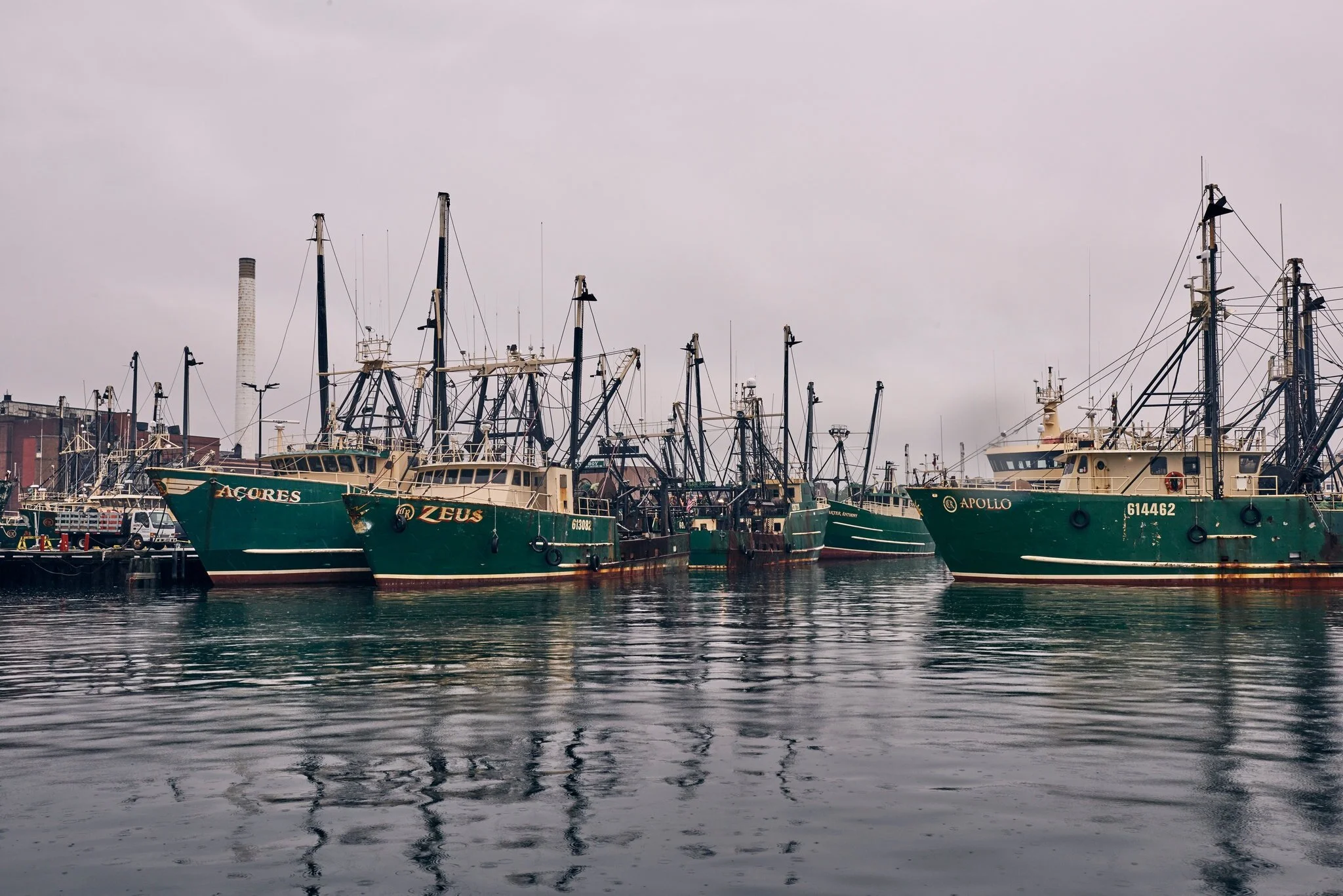
Massachusetts Gains Foothold in Offshore Wind Power, Long Ignored in U.S.
NEW BEDFORD, Mass. — On the waterfront of this fabled former whaling hub, the outlines of a major new industry are starting to appear.
Crews of research boats perform last-minute tuneups before heading out to map the bottom of the Atlantic Ocean. A large weather buoy decked out with gear for measuring wind speeds waits on the quay for repairs. And a 1,200-foot stretch of the port has been beefed up to bear enormous loads.
By STANLEY REED and IVAN PENN
MAY 23, 2018
Photo by TONY LUONG
NEW BEDFORD, Mass. — On the waterfront of this fabled former whaling hub, the outlines of a major new industry are starting to appear.
Crews of research boats perform last-minute tuneups before heading out to map the bottom of the Atlantic Ocean. A large weather buoy decked out with gear for measuring wind speeds waits on the quay for repairs. And a 1,200-foot stretch of the port has been beefed up to bear enormous loads.
New Bedford hopes to soon be the operations center for the first major offshore wind farm in the United States, bringing billions of dollars of investment and thousands of jobs to the town and other ports on the East Coast.
On Wednesday, that effort took a major step forward as the State of Massachusetts, after holding an auction, selected a group made up of a Danish investment firm and a Spanish utility to erect giant turbines on the ocean bottom, beginning about 15 miles off Martha’s Vineyard. This initial project will generate 800 megawatts of electricity, roughly enough to power a half a million homes. At the same time, Rhode Island announced it would award a 400-megawatt offshore wind project to another bidder in the auction.
The groups must now work out the details of their contracts with the states’ utilities.
“We see this not just as a project but as the beginning of an industry,” Lars Thaaning Pedersen, the chief executive of Vineyard Wind, which was awarded the Massachusetts contract, said in an interview.
Offshore wind farms have increasingly become mainstream sources of power in Northern Europe, and are fast becoming among the cheapest sources of electricity in countries like Britain and Germany. Those power sources in those two countries already account for more than 12 gigawatts of electricity generation capacity.
But the United States has largely not followed that lead, with just one relatively small offshore wind farm built off the coast of Rhode Island. Currently, the entire country’s offshore wind capacity is just 30 megawatts.
Jeff Grybowski, chief executive of Deepwater Wind, which won the Rhode Island portion, said that together the two projects add up to a European-scale package. “This shows the U.S. is catching up rapidly to the developments in Europe,” he said.
Such projects have run into opposition here over both cost and aesthetics — utilities are typically required to opt for the cheapest sources of power, and communities have resisted plans regarded as eyesores. Senator Edward M. Kennedy helped block a wind project off the coast of Cape Cod that would have been visible from the family estate.
But the technology has the potential to bring large supplies of energy to the Northeast. Arrays of wind turbines with generation capacities comparable to major conventional power plants would be mostly out of sight, albeit within easy transmission reach of large population centers like Boston and New York City.
“We could run the whole East Coast on offshore wind,” said Amory B. Lovins, co-founder and chief scientist at the Rocky Mountain Institute, a Colorado-based nonprofit organization that advises on renewable energy.
Massachusetts is looking to capitalize. It wants to add 1,600 megawatts of electricity by 2027. That would be enough to power a third of all residential homes in the state and supply 11 percent of its overall needs. The Massachusetts Clean Energy Center, a state agency, also estimates that the projects could generate 9,850 jobs over 10 years, and add $2.1 billion to the state’s economy.
Developers say the state’s plan includes a series of projects large enough to help spawn a network of local suppliers of everything from components for the turbines to services like maintaining them, and drive down costs. Other states are pushing forward as well. Connecticut will soon name a developer for an offshore wind project of its own, while New York and New Jersey have both announced ambitious plans.
New England is particularly well suited to offshore wind farms. There is not enough land for wind turbines onshore, and the area is not ideal for solar power. At the same time, Massachusetts has been under pressure to find new sources of energy to replace aging conventional and nuclear plants, as well as meet targets for reducing greenhouse gas emissions blamed for climate change.
The state is betting that, by investing in offshore wind decades after Northern Europe first tested the technology, it can avoid some of the growing pains experienced across the Atlantic.
For years, projects there required large government subsidies to be economically viable. Recently, technical advances and plummeting prices have meant that countries like Germany and the Netherlands have been able to award offshore wind projects with zero subsidies. As a bonus, offshore wind farms have supported thousands of jobs in port cities in the region.
Two of the three bids in Massachusetts came from European developers. The winner was a joint venture of Copenhagen Infrastructure Partners, a Danish renewable energy investment firm, and a subsidiary of Iberdrola, a Spanish utility. The other bids came from a consortium led by the Danish wind giant Orsted, and Deepwater Wind, which is based in Providence, R.I., and mainly owned by D.E. Shaw, an investment firm.
“We know in light of Northern Europe’s experience with offshore wind that many U.S. ports will benefit from the arrival of the industry here,” Jon Mitchell, the New Bedford mayor, said in an interview.
New Bedford has benefited from a lucrative sector before. In the mid-19th century, its whaling industry made it one of the wealthiest cities in the United States. “Nowhere in all America will you find more patrician-like houses; parks and gardens more opulent, than in New Bedford,” Herman Melville wrote in his epic novel, “Moby-Dick.”
In the hopes of another such boost, the Massachusetts Clean Energy Center, the state agency, has already spent $113 million dredging the harbor and expanding and reinforcing a 29-acre marine commerce terminal. The state is preparing it to load the components of turbines that stretch up to 600 feet high and weigh many tons onto special vessels for installation at sea.
Whether Massachusetts can pull of its ambitious plans will depend to some degree on local issues — and not everyone in the area is enthusiastic.
In particular, some of New Bedford’s fishermen are worried. The city’s port is already home to hundreds of fishing boats, as well as seafood auction houses and processing plants. It generates about $3.3 billion a year and supports about 6,200 jobs, according to the local authorities.
“You don’t want to destroy one type of sustainable energy harvest with another one,” said Kevin Stokesbury, a professor at the School for Marine Science and Technology at the University of Massachusetts at Dartmouth.
Eric Hansen, a scallop fisherman, said that he and his colleagues were concerned about threading their way through a relatively narrow allotted path through spinning turbines.
“Think fog, heavy seas,” he said.
Even so, wind power is gaining its adherents.
Opposition to offshore wind in the state appears to have quieted since the death of Mr. Kennedy in 2009. The senator and his family successfully resisted a project off Cape Cod that would have been the first offshore wind farm in the United States, a project proposed in 2001.
The area’s high electricity prices may prove, counterintuitively, to be a plus. Power prices in Massachusetts are the second highest in the nation, behind only Hawaii’s, and high rates prevail in much of the rest of New England and in New York. As a result, customers might be more willing to pay the increased early prices for power generated by offshore wind.
The economic boost, too, is appealing, especially in a once-affluent city of 100,000 people.
Kevin McLaughlin employs more than 100 people in his shipyards across the harbor at Fairhaven, and has already won additional work from offshore operators.
“As long as there are boats that will be here,” he said, “it is business for us.”
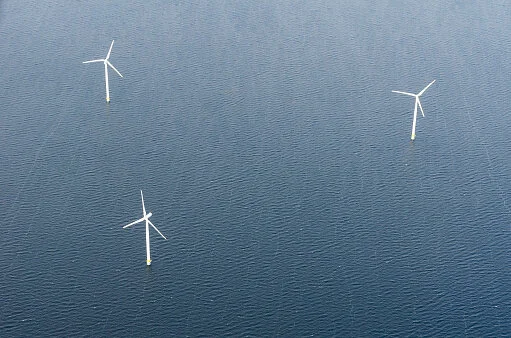
Vineyard Wind sweetens pot
An offshore wind energy company with plans to bring connector cables ashore on Cape Cod says it will spend $2 million to train locals for new careers to help position Massachusetts as the leader of the nation’s offshore wind industry workforce, but only if it wins a contract to provide wind energy to electric distribution companies.
By Kristen Young
Posted Feb 26, 2018 at 7:08 PM
Updated at 6:24 AM
An offshore wind energy company with plans to bring connector cables ashore on Cape Cod says it will spend $2 million to train locals for new careers to help position Massachusetts as the leader of the nation’s offshore wind industry workforce, but only if it wins a contract to provide wind energy to electric distribution companies.
Through its new “Wind Workforce” initiative, Vineyard Wind would partner with Cape Cod Community College in West Barnstable, Massachusetts Maritime Academy in Buzzards Bay and other schools to train students for jobs needed to staff its wind farm proposed for the waters south of Martha’s Vineyard, said Erich Stephens, the company’s chief development officer.
The initiative would train students so they are qualified to fill as many as 1,000 jobs related to the engineering, design, construction and operation of the project by 2022, but the ultimate goal is to give Massachusetts the highest skilled wind energy workforce on the East Coast, Stephens said.
“We wanted to start to build the educational infrastructure and educational capacity, so for other projects that come along after ours, there’s a ready workforce that’s got the training,” he said.
Massachusetts was one of the first East Coast states to implement wind energy legislation, giving residents here a chance to get critical experience and training ahead of workers elsewhere, Stephens said.

Vineyard to spark US gold rush
A first phase of the up to 3GW Vineyard offshore wind farm off Massachusetts will play a major role breathing life into the sector in the US, according to project co-developer Avangrid Renewables.
February 22, 2018 8:17 pm
A first phase of the up to 3GW Vineyard offshore wind farm off Massachusetts will play a major role breathing life into the sector in the US, according to project co-developer Avangrid Renewables.
The Iberdrola company and partner Copenhagen Offshore Partners has bid part of the project into the ongoing 800MW call for offshore wind being run by the state. Winners are due in April.
“I think the most significant advantage our project has is the online date as early as 2021,” said Avangrid Renewables president and chief executive Laura Beane.
The project is “well into” its five-year plan with key permit applications under way and benefits from an experienced development team, added Beane.
“The combination of our US onshore renewables and transmission expertise, the expertise that we have in the US energy markets and, probably most importantly, the ability to leverage the capabilities of our European affiliate which has demonstrated technical knowledge and engineering capabilities uniquely positions us for a leading role in this growing market,” she added.
“We really believe that our early online date, a very mature project and a very skilled team is well positioned for success in this RFP,” said Beane.
If awarded a contract, the developer plans to start construction in 2019. Avangrid estimates Vineyard’s total potential capacity is 3GW.
Avangrid’s 2GW project off Kitty Hawk, North Carolina has a longer lead time, with construction expected after 2025.
The US offshore wind market is the “next frontier” for Avangrid, said Beane.
Offshore costs are declining, northeastern load centres have set aggressive renewable targets and there are insufficient land and siting issues for onshore generation and transmission.
“I think with all these fundamentals coming together it is clear that US offshore has a very bright future and is poised to play a big part in the renewables market going forward,” said Beane.

Vineyard Wind would help us weather storms
During the peak of the historic “bomb cyclone” winter storm on Jan. 4, the electricity network that serves Cape Cod and the Islands faced a significant test. The Pilgrim Nuclear Power Station in Plymouth went offline when a transmission line snapped in high winds and blizzard conditions, an event that forced curtailment of generation at NRG Energy’s Canal Generating Plant in Sandwich.
By Mike Jacobs
Posted Feb 14, 2018 at 3:00 AM
Updated Feb 14, 2018 at 7:19 AM
During the peak of the historic “bomb cyclone” winter storm on Jan. 4, the electricity network that serves Cape Cod and the Islands faced a significant test. The Pilgrim Nuclear Power Station in Plymouth went offline when a transmission line snapped in high winds and blizzard conditions, an event that forced curtailment of generation at NRG Energy’s Canal Generating Plant in Sandwich.
The two plants, which provide power to more than 180,000 homes in the region, didn’t come fully back online for 72 hours. Another outage could have triggered blackouts during three days of horrible conditions.
But what if Vineyard Wind had been built and online before to the storm? The offshore wind project’s 800 megawatts of clean energy not only would have eased the threat of an electricity grid crash, it would have dramatically reduced environmental impacts.
Environmental impacts? Indeed, frigid arctic temperatures and stormy conditions strained the capacity of interstate natural gas pipelines to transport enough fuel to meet the region’s demand for heating and electric generation. The frigid conditions led to an incredible spike in wholesale gas prices, more than 10 times the 2017 annual average price.
While most electricity in the region comes from burning natural gas in normal conditions, during extreme cold the gas is prioritized for home heating, and electricity generators turn to stored oil. Cold-weather conditions force electric generators to burn emission-intensive oil to fuel their turbines, releasing into the atmosphere tons of excess greenhouse gases like carbon dioxide, along with pollutants that affect local air quality. Commonwealth magazine reported that during 14 days of extreme cold after Christmas, New England’s power generators burned close to 2 million barrels of oil, more than they used in 2016 and 2017 combined.
Wind data provided by the Massachusetts Clean Energy Center’s offshore measurement station show that had Vineyard Wind been in service, it would have operated at full 800-megawatt power during the storm’s peak. In addition to more than making up for the outage at Pilgrim (which generates only 685 megawatts), Vineyard Wind would have reduced CO2 emissions by more than 67,000 metric tons during the “bomb cyclone,” based on figures reported by the regional grid operator, ISO New England. That level of greenhouse gases is roughly the same as the volume of tailpipe emissions produced by 14,000-plus cars over the course of a single year.
During the storm, power prices spiked to their highest level in years. Vineyard Wind’s 800 megawatts also would have mitigated this situation by providing enough clean, emission-free electricity over the four days during and after the storm to limit price spikes that occurred in the regional wholesale electricity market. Based on actual grid prices and weather conditions from early January, potential power production from a Vineyard Wind project would have saved Massachusetts customers nearly $15 million, along with another $31 million for customers in other New England states.
The recent extreme weather reminds us why the Cape and Islands region needs offshore wind energy sooner rather than later. More cold extremes will come in future winters. If Vineyard Wind is approved to start construction in 2019 as the first commercial large-scale offshore wind farm in the United States, it will deliver tremendous benefits to residents and businesses — including improved reliability, tremendous reductions in greenhouse gas emissions and stable wholesale electricity prices during the worst weather that winter has to offer.
— Mike Jacobs is chairman of the Vineyard Power Cooperative, a community-owned organization dedicated to a sustainable energy future for Martha’s Vineyard. He leads the Union of Concerned Scientists Climate and Energy Program’s Electricity Markets and Regulatory division.
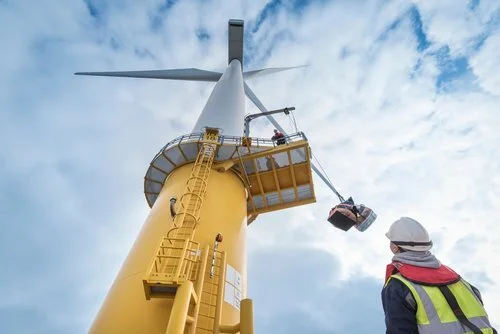
Cape Cod Times Editorial: NIMBY persists
Perhaps it’s because we are exhausted from fighting Cape Wind for so long, perhaps we are tired of the specious arguments against appropriately sited offshore wind, or perhaps we are frustrated by the small minority of people who would delay or even stop a project that benefits the common good.
Posted Feb 4, 2018 at 3:01 AM
Perhaps it’s because we are exhausted from fighting Cape Wind for so long, perhaps we are tired of the specious arguments against appropriately sited offshore wind, or perhaps we are frustrated by the small minority of people who would delay or even stop a project that benefits the common good.
Whatever the reason, we are not going to oppose Vineyard Wind’s proposal to run its offshore wind cables through Lewis Bay.
Vineyard Wind, one of three wind energy developers seeking to build large wind farms 15-25 miles offshore, wants to connect cables from its wind farm to an electric substation off Oak Street in Barnstable. Developers prefer that the cables be buried 6 to 7 feet below the seafloor and routed through Lewis Bay and Yarmouth before reaching the Barnstable substation.
Yet several West Yarmouth residents who live near Lewis Bay are protesting the plans. The complaints range from the alleged disruption of scallop dredging to water degradation and potential leaks from transformer fluids at the substation.
“Lewis Bay boasts a combination of recreational boating, beaches, swimming, fishing, and both commercial and recreational shellfishing with channel access to Nantucket Sound for ferries and commercial fishing vessels,” wrote one of those opposed. “Ocean currents, channel dredging and increased ferry traffic already contribute to the rapid filling-in of Lewis Bay, limit navigable water and impact marine life.”
We doubt the laying of cables will adversely affect boating, beaches or swimming, but if state and federal regulators find that it could contribute to the filling-in of Lewis Bay, then they should require the company to dredge the area before they bury the cables. As for shellfishing, the developers should work with the local fleet to identify potential scallop beds and then work to avoid them. In other words, none of the concerns raised so far are insurmountable.
Some of the arguments against are laughable, such as electric cables may cause cancer in humans and harm marine life. So we can tolerate electric cables in the air above us, but not cables buried 6 or 7 feet in the ocean floor?
As for concerns about the potential for the contamination of drinking water if there is a leak of transformer fluids at the substation, the developer has said the company would build a system to handle any spills as part of the upgrades that would be needed at the substation.
Now let’s weigh the benefits of the wind farm to the larger community. The wind farm, which would consist of an array of turbines spaced at least eight-tenths of a mile apart south of Martha’s Vineyard, has the potential to generate up to 800 megawatts of power. That could bring power to more than 400,000 homes and businesses across the state.
Vineyard Wind is among three companies vying for state contracts to sell offshore wind power to utilities in Massachusetts. The other two projects — Bay State Wind and Revolution Wind — include plans to bring cables onshore in Somerset at the former Brayton Point coal plant. The off-Cape plant has been sold by Dynegy Inc. to Commercial Development Company Inc., which has plans to develop the property with offshore wind energy in mind. All three projects would be located 15 to 25 miles off the coast. The projects are expected to generate hundreds of jobs and boost economic development across the region.
During the state’s environmental review process, the public and other regulators provide comment on a rough sketch of a project and its effects. Vineyard Wind outlined its case in an environmental notification form, which was submitted in December. The deadline to comment on the environmental notification form is Jan. 30.
The project has already received input from numerous stakeholders over the past half decade, including local, state and federal governments; tribes; environmentalists; and working groups from a number of fisheries.
Keep in mind that all three projects would be built in an area that’s been identified by state and federal regulators as being appropriate for offshore wind.
The sooner construction begins on these offshore wind farms, the sooner we all benefit from clean power.
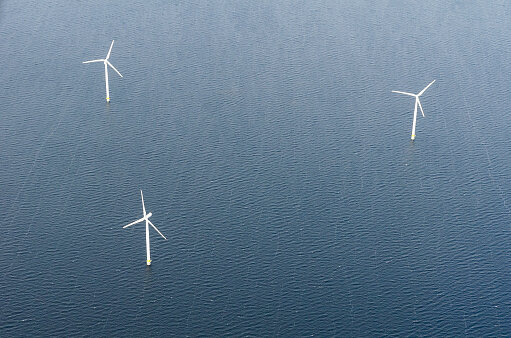
Vineyard Wind Grows Offshore Wind Team to Prepare for New U.S. Project
Vineyard Wind, an offshore wind energy developer vying to build the first utility-scale project off the coast of Massachusetts, is transitioning its organization to prepare for the construction phase of its project. It recently named long-time offshore wind industry expert Lars Thaaning Pedersen as its new CEO and Iain Henderson as its CFO.
Vineyard Wind, an offshore wind energy developer vying to build the first utility-scale project off the coast of Massachusetts, is transitioning its organization to prepare for the construction phase of its project. It recently named long-time offshore wind industry expert Lars Thaaning Pedersen as its new CEO and Iain Henderson as its CFO.
Vineyard Wind logoErich Stephens, who has led development of the project since 2014, will become Vineyard Wind’s Chief Development Officer, and will continue his work focusing on the pre-construction development of the project.
The executive team additions were part of a long-planned evolution by project owners Copenhagen Infrastructure Partners (CIP) and Avangrid Renewables aimed at bolstering the team with industry experts with a long track record of successfully constructing and operating projects in Europe.
“As we grow our team in Massachusetts, we have assembled some of the best people in the offshore wind industry to advance our effort,” said Pedersen. “With Erich’s unrivalled experience developing offshore wind in the US, leading the Vineyard Wind project from its inception, and the addition of Iain to our team, we believe we will be able to soon deliver the best possible offshore wind project for Massachusetts. We’re looking forward to building the offshore wind industry here in New England and I am excited to be a part of the team.
About Pedersen
Prior to relocating to Massachusetts and being named CEO, Pedersen had served as the project director for Vineyard Wind on behalf of Copenhagen Offshore Partners, the offshore wind development company of
CIP.
Pedersen has a deep background in the offshore wind industry since 2008. As co-CEO of Copenhagen Offshore Partners, Pedersen has overseen the development of three offshore wind projects since 2014, including a project off the coast of Canada and one in Europe. Prior to COP, Pedersen had been an executive at DONG Energy, the Danish offshore wind company for about 10 years.
At DONG Energy (now Orsted), Pedersen most recently served as Senior Vice President, Market Development & Asset Management. In that role, Pedersen oversaw the Development and Operations of more than 10 European offshore wind projects.
About Henderson
Prior to joining Vineyard Wind, Henderson was the Head of Regulated Transactions for Scottish Power’s Renewables business unit for seven years. He’s been with Scottish Power for a total of 18 years. Scottish Power is a subsidiary of Iberdrola, the utility that also owns Avangrid Renewables, one of the owners of Vineyard Wind. At Scottish Power, Henderson managed the divestment of offshore transmission assets of the company and managed agreements with joint venture partners.
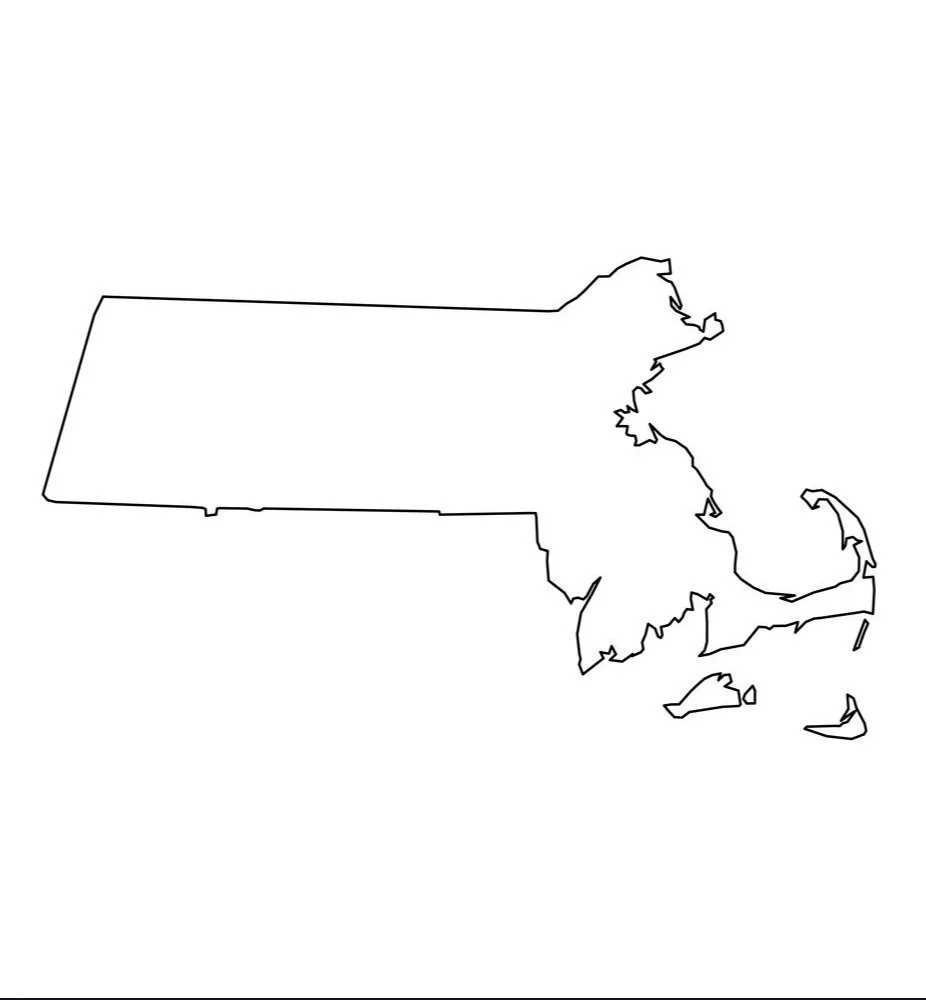
Offshore wind takes a new course for Massachusetts
The Cape Wind project was first proposed in 2001, six years before the first iPhone. A lot has changed for the better since 2001, and not just with cell phones. Today’s offshore wind turbines are now vastly more efficient than those proposed by Cape Wind, and can be installed in much deeper water, far from any shore.
By Erich Stephens, CAPE COD TIMES
The Cape Wind project was first proposed in 2001, six years before the first iPhone. A lot has changed for the better since 2001, and not just with cell phones. Today’s offshore wind turbines are now vastly more efficient than those proposed by Cape Wind, and can be installed in much deeper water, far from any shore.
Unfortunately, some things have not changed much since 2001, including the threat of global warming, particularly to coastal communities like ours. And Massachusetts is still at the end of the energy pipeline, putting us at risk with sometimes unreliable supply and resulting price spikes.
Massachusetts has now set a new course to realize the benefits and opportunities of modern offshore wind technology. In 2016, legislators from the South Coast, the Cape and Islands led the way in enacting a law requiring the state’s utilities to procure a total of 1,600 megawatts of offshore wind energy. Gov. Charlie Baker quickly signed the legislation, and his administration has since been working actively and thoughtfully towards its implementation.
This new policy gives Massachusetts an opportunity to be at the center of a new industry, putting many hundreds to work in the region harnessing the affordable, local, clean energy blowing far offshore, and doing so with minimal impacts to the coastal views we all hold important.
In December, Vineyard Wind and two other companies will submit bids to build projects using state-of-the-art offshore wind technology. Each project proposed must be over 13 miles from the nearest shore, and use a location selected in a multi-year, public process. Scientific studies of the nearby ocean and seafloor were conducted over several years, ensuring that the best information was used in making project siting decisions. The fishing industry, birds, marine mammals, the tourism industry, the region’s history and natural viewsheds were all carefully considered by a panel of tribal, local, state, and federal officials in selecting appropriate areas for offshore wind.
The Vineyard Wind project will be the closest project to the Cape, although more than 30 miles away. At this distance the turbines will usually be invisible, and barely visible if at all.
The Cape stands to directly benefit from the Vineyard Wind project. Vineyard Wind is exploring connecting cables from the project to already-existing electrical substations by placing the cables underneath roads, alongside existing buried utility and sewer lines. Modern technology allows us to install these cables deep underneath beaches with little or no disturbance, using access points placed in existing roads and set back from dunes and other sensitive habitats. Vineyard Wind is seeking to enter into host community agreements with the towns where the cables would be located, including Yarmouth and Barnstable, providing significant, fixed revenue streams to those communities over the 30-year life of the project, helping to pay for schools, public safety, and road maintenance − while causing no additional town expenditures.
Vineyard Wind has and will continue to seek public participation early in our project planning process, when concerns for communities and the environment can be more easily addressed, and local benefits identified. We engaged a fisheries’ representative to help us better understand concerns of area fishermen. We entered into a community benefits agreement with Vineyard Power, a nonprofit co-operative with over 10 percent of the Martha’s Vineyard’s electricity customers as members.
Once completed, the 1,600 megawatts of offshore wind will generate enough clean energy to supply more than 750,000 homes, making an enormous contribution to reducing global warming pollutants while enhancing our energy security and stabilizing prices. Offshore wind will also bring billions of dollars of private investment into the region, diversifying and growing the region’s economy. There will be investment in local ports, new services such as transport vessels, ongoing research offshore, and training the skilled workforce needed to build and operate the projects.
Vineyard Wind hopes to work with the communities of Cape Cod and the Islands in realizing together the many benefits of offshore wind.
— Erich Stephens is the CEO of New Bedford-based Vineyard Wind, one of three companies competing to build the first offshore wind project off the coast of Massachusetts.
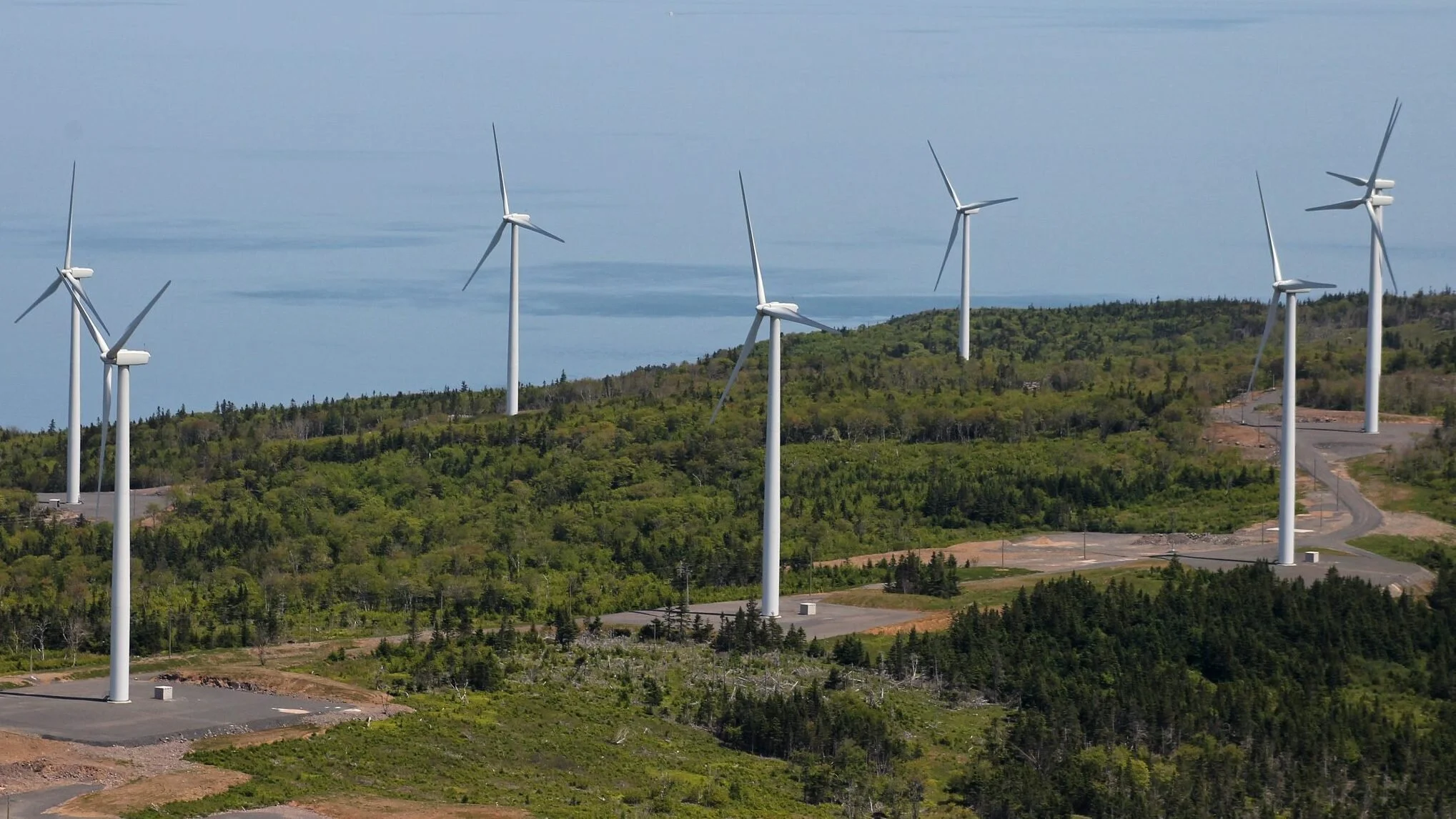
A $4-Billion Clean Energy Project That Could Boost the N.B. Economy Is on the Horizon
The $15-billion Energy East pipeline project is officially dead, but there is another potential multi-billion-dollar energy project on the horizon – and a clean energy one at that.
The $15-billion Energy East pipeline project is officially dead, but there is another potential multi-billion-dollar energy project on the horizon – and a clean energy one at that.
Emera currently has a $4-billion proposal before the Massachusetts government to supply clean energy to the state from seven wind farms (five in New Brunswick, two in Nova Scotia) and two hydro suppliers. The power would be transferred from Coleson Cove in Saint John to Plymouth, Massachusetts via the Atlantic Link, a proposed 370-mile, high-voltage subsea cable.
It’s by no means a guarantee because it is a competitive bidding process to supply Massachusetts with 9.45 terawatt hours of wind and/or hydro energy per year over the next 20 years (Emera is proposing to supply 5.69 terawatt hours of that allotment in its bid). But it would create thousands of jobs in the construction phase and put in place wind-generation and undersea-cable infrastructure that could lead to other future developments in the province.
The various proposals have been submitted and are currently under review with a decision expected in January of next year.
Huddle editor Mark Leger recently spoke by phone with Boston-based Gerald Weseen, the VP, U.S. Government Affairs, for Clean Power Northeast Development, a subsidiary of Emera Inc. The following conversation has been edited for clarity and length.
Take me back to the beginnings of the proposed Atlantic Link.
There’s been a [long-running] discussion about energy collaboration between New England and Atlantic Canada. The concept of moving energy between the two regions is not new, and the concept of moving clean energy between Atlanta Canada and New England is certainly not new.
For context, there’s a fairly close linkage on public policy in terms of the desire to change the generation mix and move toward lowering greenhouse gas emissions in the electricity sector in both Atlanta Canada and New England. In Connecticut and Massachusetts, there are state laws on the books that require economy-wide reductions in greenhouse gas emissions of 80 percent by 2050.
And so in Massachusetts in 2016, the legislature and the Senate approved a bill that governor Governor Baker signed into law that required the electric utilities to do two procurements of clean energy.
One procurement is the one that Emera has bid on. [It] requires the utilities to procure 9.45 terawatt hours of hydro and/or wind energy per year. [It] would bring clean energy from Atlantic Canada into southern New England.
[Our] proposal that went into the Massachusetts procurement process involves a 1,000-megawatt high-voltage direct current transmission line (HVDC) going from Colson Cove to Plymouth Massachusetts, which is about a 45-minute-drive south of Boston.
The energy would come from new wind farms in New Brunswick and Nova Scotia, and hydro from NB Power and Nalcor Energy in Newfoundland and Labrador. About 70 percent of the energy that’s proposed for delivery to New England via the Atlantic link transmission cable is wind and the rest of it is hydro. The hydro-wind combination is important because wind is an intermittent resource and the hydro basically fills in the gaps and allows a more predictable flow of energy on a scheduled basis, which is important to the receiving utilities in Massachusetts.
The scale of the project [is] enormous. How how did you hit upon the idea of tying these wind farms into a subsea cable like this?
Emera is just completing construction of the Maritime Link, which is a 170-kilometer subsea cable between Newfoundland and northern Nova Scotia. The cables were laid this summer, and that transmission facility is going to be in service by the end of this calendar year. Ultimately Maritime Link will be the conduit for energy from the Muskrat Falls hydro project, which will supply energy to the province of Newfoundland and Labrador, but is also under contract to provide energy to Nova Scotia Power.
There’s some excess energy from that project and some of that energy has been committed to the Atlantic Link project. Some of it could potentially come from other hydro sources in Newfoundland and also some of the hydro would come from NB Power.
NBPower also has an option to participate in the Atlantic wind project as an equity partner, but that’s a decision that they will make at a later time.
High-voltage direct current is a very efficient way to move large amounts of electricity long distances, and the experience we’ve had with Maritime Link and the distance between Atlantic Canada and New England, and the difficulty in siting and constructing overhead transmission through multiple states, makes a subsea cable pretty attractive.
How long would the Atlantic Link cable be compared to the one for Maritime Link?
About three [or four] times as long. We have two options that we’ve been discussing and they’re about the same length – around 370 miles or 600 kilometres.
Are there undersea cables for other projects around the world that are that long?
There are multiple dozens of HVDC (high-voltage direct current) subsea cables, mostly in northern Europe. The proposed length of Atlantic Link would make it the longest cable today, although there are several proposed [ones] that could be in service prior to the Atlantic Link being in service that would be longer.
So this is becoming a very common way of transmitting electricity.
It is, especially large amounts of electricity over long distances for sure. High-voltage direct current (HVDC) is used for overland transmission; it’s not just for subsea transmission. The technology is a very efficient way to move large amounts of electricity over long distances. In some circumstances using this technology for a subsea connection makes sense because it’s either a more direct path or you might avoid some of the complications of putting up towers and doing overhead transmission.
This project is about supplying electricity to the New England market. What are the benefits to New Brunswick and Nova Scotia of engaging in a development designed to serve other markets?
There are a number of [benefits]. The electric infrastructure that’s being built has a very long life – this contract is for 20 years. Most of the facilities that would be built in Nova Scotia and New Brunswick to meet that demand will be in service beyond that [time frame]. So there’s the potential for those facilities to actually serve customers in New Brunswick or Nova Scotia in the future.
There is [also] the infrastructure that goes into building that and connecting the markets [which] creates greater options in terms of moving electricity back and forth. The Atlantic Link, as currently proposed, will be about two-thirds utilized so there’ll be additional capacity on the line once it’s built for the movement of energy between Atlantic Canada and New England outside of what’s under contract for the Atlantic Link.
In terms of the actual development of the wind farms, the construction of the converter station and substation, and the onshore work of getting ready to lay the cable, there are the jobs associated with that construction. We had a third-party analysis done by a company called Power Advisory. Over the construction period, 7,500-7,700 full-time equivalent jobs [would be] created over that time period.
On an ongoing basis, there’s tax revenue for the communities in which the wind farms are located, probably about $10- to 15-million of local property taxes a year. There would be lease payments to landowners. There [would be] ongoing operation and maintenance benefits. In order to run the wind farms there will be jobs associated with that, but also money being spent in local communities.
From an NB Power perspective, moving the energy from the location of the wind farm to the converter station at Coleson Cove will involve the use of NB Power transmission facilities and for that, it would be paid a fee.
I’m sure this must be ‘old hat’ to you by now, but the scale of it is fascinating – the different pieces that you’ve put together for this.
It’s been a very interesting process to be part of the conversation. [I] spent a long time in New Brunswick first and then in Nova Scotia and been involved in some of the regional conversations about energy and about greenhouse gas emissions reductions and about regional cooperation. This has been really fascinating because now we’ve expanded the cooperation conversation from just being within Atlantic Canada to being between Atlanta Canada and New England.
It is definitely a large-scale project, and it’s about the exchange and the shared achievement of clean energy goals between regions that have a relatively similar public policy structure and objective in terms of both clean energy development and greenhouse gas emissions reductions.

Study evaluates offshore wind manufacturing sites
NEW BEDFORD — A new report details how much it would cost to ready each of 18 Massachusetts sites for offshore wind manufacturing, staging, and operations.
By: JENNETTE BARNES, SOUTH COAST TODAY
NEW BEDFORD — A new report details how much it would cost to ready each of 18 Massachusetts sites for offshore wind manufacturing, staging, and operations.
Commissioned by the publicly funded Massachusetts Clean Energy Center and released on Tuesday, the 415-page engineering study lets developers compare the investments necessary for a particular function, such as turbine manufacturing, across different locations. The report includes six locations in New Bedford, six in Boston, three in Fall River, two in Somerset, and one on the Quincy-Braintree line.
In New Bedford, for example, it shows that preparing to manufacture turbine blades would cost $40.6 million at Revere Copper, $69.1 million at Eversource/Sprague, and $100.5 million at North Terminal, but only $21.7 million at Hathaway Mills. Hathaway Mills has no water access but is only 1,000 feet south of the New Bedford Marine Commerce Terminal, the expected launching point for vessels headed to wind installations off Massachusetts. Other New Bedford sites are the State Pier and Whale’s Tooth parking lot & New Bedford railyard.
Brayton Point in Somerset is notable for its large size at 307 acres, but the cost to redevelop and reuse it would be relatively high — $102.2 million for manufacturing of turbine blades.
Bill White, senior director for offshore wind at the Clean Energy Center, said the goal of the report is to make it easy for investors to choose Massachusetts.
“This is an exciting time as the industry starts to establish itself,” he said.
The three bidders for Massachusetts’ first commercial offshore wind contract have already committed to using the New Bedford Marine Commerce Terminal as a staging and deployment point. But locations for manufacturing, storage, and operations remain up in the air.
The report gives individual data for manufacture of turbine foundations, towers, blades, and nacelles (the hub of the turbine, which houses the generator).
For each location and business purpose, it provides the estimated redevelopment cost and reuse cost. Redevelopment includes demolition of existing facilities, excavation, and grading. Reuse represents construction of new buildings, but not acquisition of manufacturing equipment, according to Craig Gilvarg, a spokesman for the Clean Energy Center.
For blade manufacturing, East Boston Shipyard came in at $29.1 million in total costs, and Parcels M and M-1 in the Raymond L. Flynn Marine Park in South Boston came in at $27.9 million.
The Standard-Times tried to reach Boston’s economic development chief, John Barros, but he was not available by deadline.
Each location offers different strengths in terms of size, water access, water depth, load-bearing capacity, and proximity to the wind installation areas.
Close proximity is critical for operations and maintenance, but less so for manufacturing, New Bedford Mayor Jon Mitchell said. He said his goal is to make the city home to the entire cluster of offshore wind businesses, so companies feel like they need a presence in New Bedford.
Rep. Patricia Haddad, D-Somerset, speaker pro tempore of the Massachusetts House of Representatives, said New Bedford is uniquely positioned and will probably get most of the operations and maintenance work, but manufacturing could be a different story.
With the massive waterfront access at Brayton Point — possibly the largest in the northeast, according to White — the Somerset site has a lot of potential, Haddad said.
“The opportunity to turn that into what some company actually wants is greater than places where their ports are already up and running and have designated activities,” she said.
Fall River Mayor Jasiel Correia could not be reached for comment. An assistant said he had been in meetings and did not have a chance to respond.
Erich Stephens, CEO of Vineyard Wind, called the report an important contribution to the industry.
White said a big part of what makes New Bedford appealing is that the harbor entrance has no bridge, and therefore no height restrictions. That makes New Bedford one of the better harbors in the northeast, he said.
Hathaway Mills and Eversource/Sprague have drawn significant interest because of their proximity to the terminal, he said.