
Check Out Volkswagen's Community-Driven Promise
“Volkswagen operates across America through over 600 independently owned and operated dealers. So we understand the impact that this pandemic can have on local communities, and we’re here to help. For more information on our Community-Driven Promise visit go.vw.com/Community-Driven-Promise”
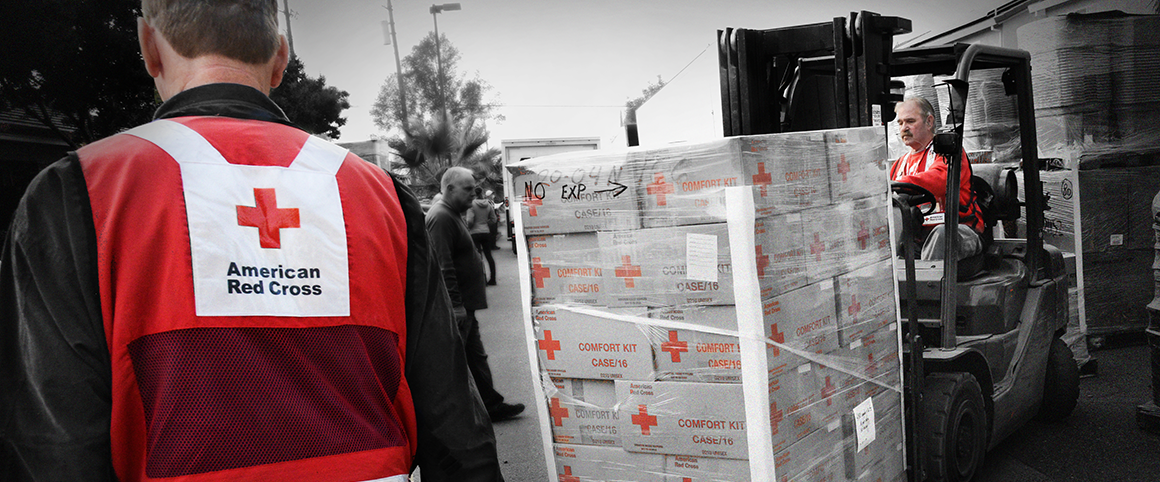
Hand sanitizer to be produced at select Anheuser-Busch facilities, and donated to the American Red Cross
Anheuser-Busch, the country's largest sponsor of live sports and entertainment, today announced that it will redirect sports and entertainment investments to its non-profit partners to respond to the COVID-19 public health crisis. The company has a longstanding tradition of providing support to its neighbors and communities in their times of need throughout its more than 165 year history. […]
March 25, 2020, New York, NY
Anheuser-Busch, the country's largest sponsor of live sports and entertainment, today announced that it will redirect sports and entertainment investments to its non-profit partners to respond to the COVID-19 public health crisis. The company has a longstanding tradition of providing support to its neighbors and communities in their times of need throughout its more than 165 year history.
As part of a $5 million donation to the American Red Cross, Anheuser-Busch alongside its sports partners will identify available arenas and stadiums to be used for temporary blood drive centers. The company’s tour centers in Merrimack, NH, and St. Louis, MO, will also be made available to the Red Cross. As part of the donation, Anheuser-Busch will also donate media air time to the Red Cross in support of their public service announcements. To learn more about how to attend a blood drive, visit RedCross.org.
In addition, Anheuser-Busch announced earlier this week that it will use its supply and logistics network to begin producing and distributing bottles of hand sanitizer to accommodate the growing needs across the United States. The hand sanitizer will be utilized at Red Cross blood donation centers and to support emergency shelters for future relief efforts.
“COVID-19 has changed how we all live our lives, but it hasn’t changed Anheuser-Busch’s priorities and our commitments as an employer, a business partner and a corporate citizen,” said Michel Doukeris, CEO, Anheuser-Busch US. “While we can’t solve this crisis on our own, we are proud to do what we can to serve and support our communities in need and the heroes on the front lines, using our capabilities, our relationships, and our reach to do our part. We invite other companies to use their unique capabilities to join us in this effort, however they can, so that together we can make a difference.”
To bring hope and inspiration to the people of America who may be feeling isolated and scared during this difficult time, Budweiser created an emotional 60-second video that champions the best of the American spirit, called ‘One Team.’ The spot is a tribute honoring the everyday people of America who are rising above the call of duty to help in the wake of the COVID-19 health crisis, from doctors and nurses working tirelessly around the clock to grocery store clerks working in today’s ‘new normal.’ The spot reminds us that we are all one team, and that America is at its best when its people come together to make an impact for their local communities. To watch the video and learn more about how you can help, go to Budweiser.com/OneTeam.
“Anheuser-Busch has been a longtime partner of the American Red Cross, helping identify new ways to use their resources when we need it most following natural disasters and other crises. We are currently experiencing an unprecedented number of blood drive cancellations. In fact, about 7,000 Red Cross blood drives have been canceled across the country due to COVID-19 concerns, resulting in some 220,000 fewer blood donations,” said Gail McGovern, President & CEO, American Red Cross. “We are grateful to Anheuser-Busch and their sports partners for supporting new blood drives to help us to maintain a much-needed supply for patients counting on lifesaving blood in the weeks and months to come.”
ABOUT ANHEUSER-BUSCH
For more than 165 years, Anheuser-Busch has carried on a legacy of brewing great-tasting, high-quality beers that have satisfied beer drinkers for generations. Today, we own and operate 23 breweries, 14 distributorships and 23 agricultural and packaging facilities, and have more than 18,000 colleagues across the United States. We are home to several of America’s most recognizable beer brands, including Budweiser, Bud Light, Michelob ULTRA and Stella Artois, as well as a number of regional brands that provide beer drinkers with a choice of the best-tasting craft beers in the industry. From responsible drinking programs and emergency drinking water donations to industry-leading sustainability efforts, we are guided by our unwavering commitment to supporting the communities we call home. For more information, visit www.anheuser-busch.com or follow Anheuser-Busch on LinkedIn, Twitter, Facebook and Instagram.
ABOUT THE AMERICAN RED CROSS
The American Red Cross shelters, feeds and provides emotional support to victims of disasters; supplies about 40 percent of the nation's blood; teaches skills that save lives; provides international humanitarian aid; and supports military members and their families. The Red Cross is a not-for-profit organization that depends on volunteers and the generosity of the American public to perform its mission. For more information, please visit redcross.org or cruzrojaamericana.org, or visit us on Twitter at @RedCross.
PRESS CONTACTS
Kaitlin.Craig@anheuser-busch.com, Corporate Communications, Anheuser-Busch
michael.moroney@fleishman.com, Anheuser-Busch inquiries
CTocci@webershandwick.com, Budweiser inquiries
US Utility Scorecard Reveals a Dramatic Increase in Energy Savings
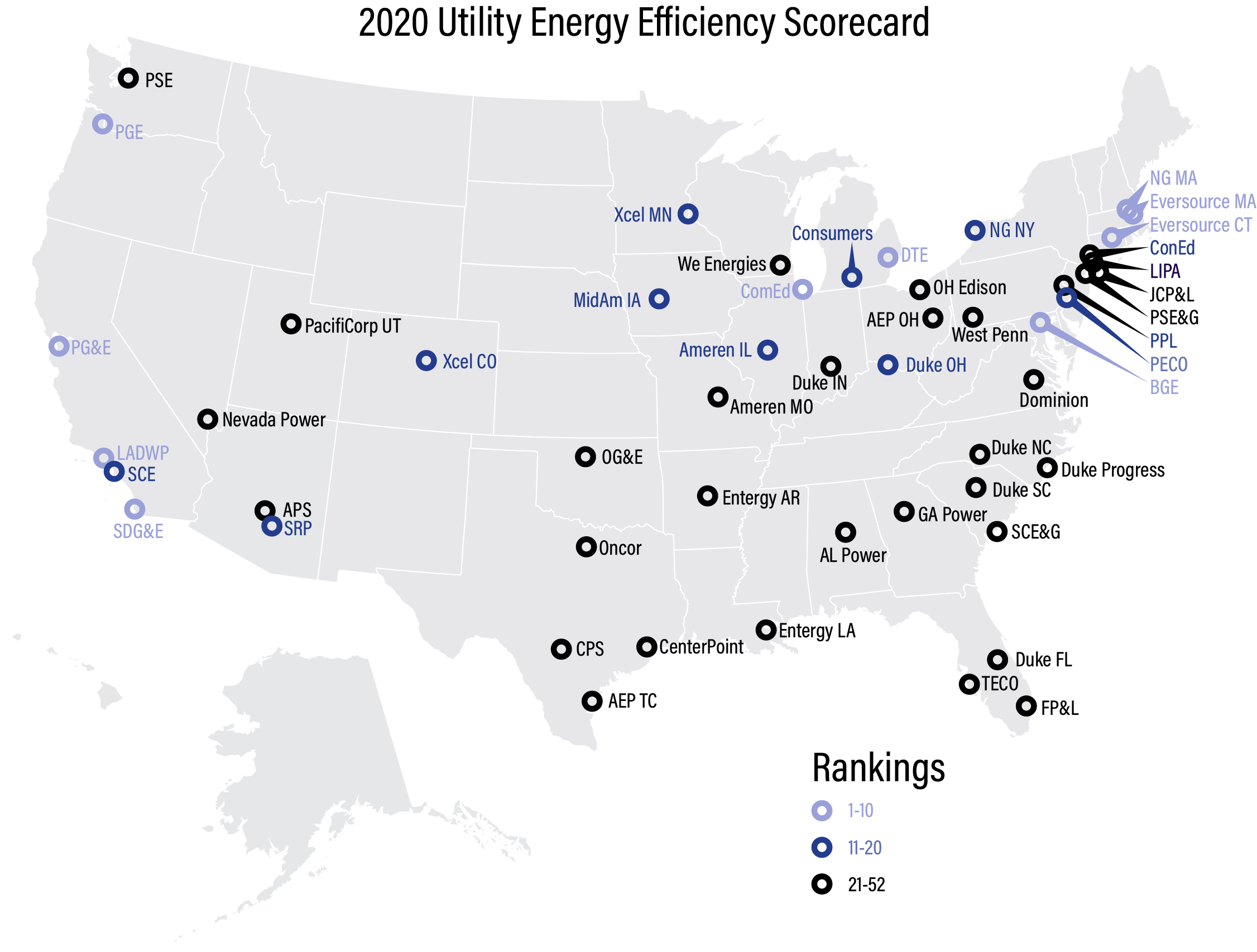
Washington, DC — The 52 largest US electric utilities have dramatically increased their overall energy savings as they adopt innovative ways to reduce greenhouse gas emissions, according to the 2020 Utility Energy Efficiency Scorecard. Leading the way are Eversource Massachusetts and National Grid Massachusetts, which tied for first place for the second time, followed by San Diego Gas & Electric (#3), Commonwealth Edison in Illinois (#4), Baltimore Gas and Electric (#5), and Pacific Gas & Electric (also #5).
This year’s scorecard, released today by the American Council for an Energy-Efficient Economy (ACEEE), comes at a time of rapid transformation in the utility sector and highlights notable changes since ACEEE’s first such ranking in 2017. It finds that […]
By Grace Relf
February 20, 2020
Washington, DC — The 52 largest US electric utilities have dramatically increased their overall energy savings as they adopt innovative ways to reduce greenhouse gas emissions, according to the 2020 Utility Energy Efficiency Scorecard. Leading the way are Eversource Massachusetts and National Grid Massachusetts, which tied for first place for the second time, followed by San Diego Gas & Electric (#3), Commonwealth Edison in Illinois (#4), Baltimore Gas and Electric (#5), and Pacific Gas & Electric (also #5).
This year’s scorecard, released today by the American Council for an Energy-Efficient Economy (ACEEE), comes at a time of rapid transformation in the utility sector and highlights notable changes since ACEEE’s first such ranking in 2017. It finds that, as a group, the utilities boosted their annual energy savings by 20% since 2015, saving almost 20 TWh of electricity in 2018 from programs administered that year— enough to power 1.8 million homes. Notably, utilities are increasing efficiency investments in low-income communities and speeding the adoption of electric vehicles.
“The most-improved utilities, Consumers Energy in Michigan and the Los Angeles Department of Water and Power, are impressively stepping up their energy-saving efforts,” says Grace Relf, lead author and ACEEE senior research analyst. By offering programs to customers that help them save energy, she says, Consumers more than doubled its energy savings since 2015 and LADWP increased savings by more than half. Yet Relf says progress across utilities is uneven, leaving a lot of room for improvement.
The scorecard ranks utilities on 20 metrics based on their 2018 performance, programs, and policies, allocating 50 possible points. Notable findings:
Eversource Massachusetts and National Grid Massachusetts, tying again for first place as they did in our previous utility rankings, each earned 92% of possible points. They offer a broad and innovative range of programs that reach many customers and target diverse end uses, including those to promote zero-net-energy buildings.
Rounding out the top 10 are the Los Angeles Department of Water and Power (LADWP) (#7), DTE in Michigan (#8), Portland General Electric (#9), and Eversource CT (#10). These utilities all saved energy worth more than 1.5% of sales in 2018 — 50% above the average. They offer learning thermostat and plug load reduction programs, and they piloted new programs in 2018.
LADWP and Consumers Energy (#11) are the most-improved utilities relative to the 2017 Scorecard. LADWP increased annual savings by more than 50% since 2015 and delivered significant savings for low-income customers. Consumers Energy more than doubled savings since 2015, responding to Michigan’s recent laws requiring increased energy efficiency targets and consideration of efficiency in resource planning.
Utilities with the most room to grow include Duke Florida (#48), Jersey Central Power & Light (#48), Dominion Virginia (#50), Florida Power & Light (#51) and Alabama Power (#52).
Utilities are dedicating more of their efficiency funding (on average 10%) to low-income programs. As a result, average low-income program energy savings (in MWhs) have increased by more than 60% since 2015. Thirty-one utilities offer comprehensive programs for low-income customers, such as home weatherization.
Utilities are increasingly promoting electric vehicles (EVs). Sixteen utilities offer a financial incentive for deploying EV charging equipment, and six offer make-ready programs that allow other organizations to deploy this equipment rapidly and economically. Twenty-five utilities are using rate design to promote EV charging at off-peak times, an increase of six since 2015.
Marcy Reed, president of National Grid Massachusetts, says: “I am proud that National Grid’s energy efficiency programs have been recognized as #1 in the nation by prioritizing low-income communities, electric vehicle infrastructure, and aggressive programs for high energy use commercial and industrial customers. We are committed to supporting the Commonwealth and our customers in our shared goals of meaningful deep emissions reductions and a clean energy future.”
“We are proud to be recognized as both a ‘top ten’ and ‘most-improved’ utility,” says David Jacot, LADWP’s Director of Efficiency Solutions. “LADWP sees energy efficiency as foundational to achieving our larger objectives of decarbonizing our energy supply and our economy, while keeping customer rates as low as possible by optimizing the system’s usage and reducing the need for costly infrastructure upgrades.”
This year’s report highlights the ways in which the utility landscape has transformed since 2015, the baseline for our 2017 scorecard. New technologies are emerging; states, utilities, and other stakeholders are increasingly focused on the reduction of greenhouse gas emissions and the important role of efficiency in supporting emissions reductions; and distributed energy resources (DERs) are continuing to come online.
Overall, the utilities offered more than 900 different efficiency programs in 2018, about 300 more than in 2015. Such programs, which can encourage energy-efficient appliances, lighting, and behaviors, deliver multiple benefits: they reduce customer bills, increased grid reliability, and facilitate greater use of renewable power such as solar and wind. Thirty-two utilities piloted new programs that involve smart thermostats, online marketplaces for energy-saving products, commercial energy efficiency financing, and integration of efficiency with other DERs such as demand response and storage.
While overall energy savings increased, this upward trend was not universal, and seven utilities saw their energy savings decrease by more than 20% since 2015. Our scorecard also found that, while there is increased focus on changing utility business models nationally, utilities are generally slow to change these models and are often reluctant to give customers access to energy usage data.
“Our results highlight the importance of strong state policies and regulatory support in utility-sector efficiency programs,” says Steven Nadel, ACEEE’s executive director. He notes that all of the top 10 utilities in this report are located in states that also rank among the top 13 in ACEEE’s 2019 State Energy Efficiency Scorecard. Policies in these states―such as energy efficiency resource standards and financial opportunities for utilities to maintain and increase revenues while delivering efficiency―are important in driving performance. As more states adopt bold clean energy policies and include a prominent role for efficiency as a low-cost electricity resource and emissions reduction strategy, we expect to see continued improvements in utility efficiency performance in those states.
Our scorecard, which received no utility funding, increases the availability of utility-sector energy efficiency data to enable benchmarking and help utilities strengthen their programs.
We focus on the 52 largest electric utilities by retail sales volume, including all 51 utilities from our 2017 Scorecard, plus Tampa Electric. We gave all the utilities the opportunity to review the 2020 Scorecard before its publication.
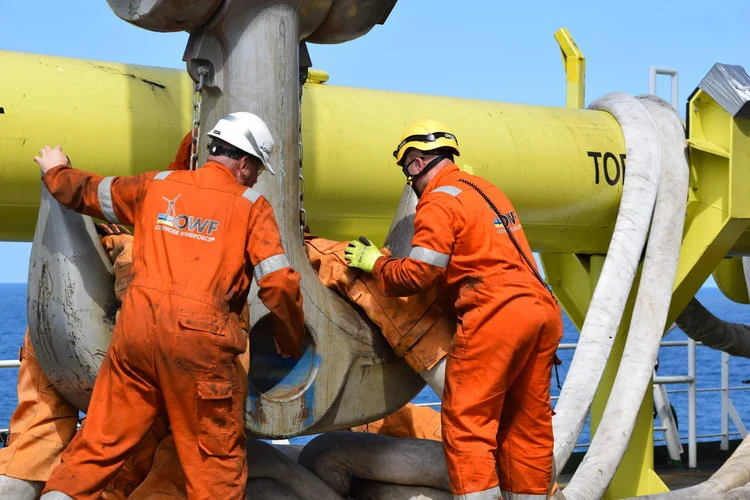
Greentown Labs, Vineyard Wind Expand Offshore Wind Innovation
Greentown Labs, the largest cleantech incubator in North America, and Vineyard Wind, developer of the first utility-scale offshore wind energy generation facility in the Northeast U.S., say they have entered a partnership to run a Greentown Launch accelerator program focused on offshore wind innovations.
The Greentown Labs and Vineyard Wind Launch program will identify and deploy innovations that enhance offshore monitoring technologies focused on protecting marine mammals. To do so, the organizations will collaborate on a 10-month Greentown Launch program, Greentown Labs’s flagship accelerator program designed to advance new venture creation and corporate partnerships with the industry’s most promising cleantech entrepreneurs […]
February 20, 2020
Greentown Labs, the largest cleantech incubator in North America, and Vineyard Wind, developer of the first utility-scale offshore wind energy generation facility in the Northeast U.S., say they have entered a partnership to run a Greentown Launch accelerator program focused on offshore wind innovations.
The Greentown Labs and Vineyard Wind Launch program will identify and deploy innovations that enhance offshore monitoring technologies focused on protecting marine mammals. To do so, the organizations will collaborate on a 10-month Greentown Launch program, Greentown Labs’s flagship accelerator program designed to advance new venture creation and corporate partnerships with the industry’s most promising cleantech entrepreneurs.
Together, Greentown Labs and Vineyard Wind will support early-stage startups developing technologies to improve the offshore wind energy and marine life value chains by providing the resources, training and mentorship they need to advance their innovations.
The Launch program will aim to forge strategic relationships between selected entrepreneurs, Vineyard Wind and Vineyard Wind’s partners. Greentown Labs and Vineyard Wind will announce a detailed request for proposals in the near future.
“Vineyard Wind is excited to partner with Greentown Labs on this initiative to support and drive innovation to the emerging American offshore wind industry. Our company and dozens of others are poised to invest billions of dollars in construction and technology on projects that will only be improved by new marine data monitoring technologies,” says Lars Pedersen, CEO of Vineyard Wind.
“We look forward to working with Greentown to engage talented cleantech entrepreneurs and startups to develop technologies that will make offshore wind projects safer and more efficient,” he adds.
Over the past five years, Greentown Labs has successfully conducted Greentown Launch programs across a variety of clean energy areas including solar, hydrogen, digital energy, the circular economy and more. Each program features unique partners and topic areas, a customized application and acceptance process, and three intensive two-day workshops to facilitate connections among the startups and supporting partners, notes the company.
Greentown Labs and Vineyard Wind will release the request for proposals in March 2020 and aim to announce selected startup participants at a public kickoff event in July 2020. The organizations will also host a final showcase to celebrate the completion of a successful program in February 2021.

Mobility goes smart and individual: Audi at CES 2020
At the 2020 Consumer Electronics Show (CES), Audi will once again display exciting exhibits – from futuristic vision vehicles to technologies ready for series production. In doing so, the premium brand is defining the digital experience of the future. CES is one of the world’s biggest […]
January 6, 2020
At the 2020 Consumer Electronics Show (CES), Audi will once again display exciting exhibits – from futuristic vision vehicles to technologies ready for series production. In doing so, the premium brand is defining the digital experience of the future. CES is one of the world’s biggest specialized fairs for consumer electronics and is considered to be an indicator of future topics. It will take place from January 7 to 10, 2020, in Las Vegas.
Open the door, take a seat, and get away from the urban stress: The fully automated Audi AI:ME represents a personal “third living space,” alongside our homes and workplaces, that is familiar with the desires and needs of its users. Passengers can use eye tracking to communicate with the show car intuitively and have it order their favorite food, for example. They can also enjoy a wellness experience in the AI:ME: A pair of VR goggles in the car allows the occupants to enjoy a virtual flight across a spectacular mountain landscape. The technology adapts virtual content to the movements of the vehicle in real time. The result: Passengers can fully relax and get away from their hectic day-to-day lives. They return to reality when they have arrived at their destination. The ordered food was delivered on time, coordinated by the AI:ME on the basis of the users’ personal preferences and the car’s navigation data. Journalists can test this concept of an empathetic mobility partner as part of an automated drive at CES 2020.
Audi Intelligence Experience: the empathetic car
A car that thinks for itself and is even empathetic? The “Audi Intelligence Experience” shows how it’s done: The car knows its user and their habits and uses intelligent functions combined with artificial intelligence to increase the passengers’ safety, wellbeing, and comfort. The self-learning navigation system is already integrated in the current generation of the MMI systems. It saves preferred destinations, connects them with the date, time, and current traffic situation, and derives suggested routes from this data. In the future, the car will also conduct a precise analysis as to the functions and settings that its user prefers, ranging from the seat position, media, route guidance, and temperature to the fragrancing of the interior. After a short time, the empathetic Audi is familiar with the user’s preferences and implements them autonomously. If desired, it even bases its settings on the user’s condition by observing their driving style and vital functions. At CES 2020, visitors can experience the basic functions of the Audi Intelligence Experience in a prototype.
Two displays, two innovations: spacial vision and the on-demand offer
A navigation arrow that points exactly into the side road where the destination is located: This will already become reality in an exhibit in 2020 with the 3D mixed reality head-up display. Audi will present the new technology it developed in cooperation with Samsung at CES. Just like with a 3D television, two views are generated of each picture: one pixel for the left eye and the neighboring pixel for the right eye. To the driver, the pictures of the 3D mixed reality head-up display appear to be floating at a distance of 8 to 10 meters; through clever representation, the apparent distance is even increased to over 70 meters. Advantage: The eyes, accustomed to a long-range view, do not have to refocus.
The transparent display on demand is a further highlight: The screen is 15 cm high, 122 cm wide, and partially embedded into the instrument panel. It offers two layers: a transparent OLED display and a black layer for a particularly deep shade of black. The highlight: Sections of the display that are not required for showing information remain transparent. They give the impression of a glass pane and thus offer an unobstructed view of the road.
The future of the automobile is fully electric and intelligently connected
More than just a pie in the sky: The current Audi models offer networking at its finest. The new 3rd generation modular infotainment platform, or MIB 3 for short, is the core. Its main processor operates ten times faster than the MIB 2. This provides significant improvements in terms of route planning and traffic forecasts, for example. Audi will also present the latest innovations in the area of lighting technology at CES 2020. Should the driver get tired, special light can provide a remedy: Blue, cool white light, for example, has a stimulating and invigorating effect. The Audi project “Human-Centric Lighting” illustrates how the way you feel can be influenced by targeted light colors to support the passengers’ concentration and memory, for example.
The portfolio of the exhibits shown at the Audi booth at CES range from the Audi AI:ME vision vehicle and the near-production-level show car Audi Q4 e-tron concept with a 12.3-inch touchscreen all the way to the Audi e-tron Sportback(combined electric power consumption in kWh/100 km*: 26.0–21.9 (WLTP); 22.7–20.6 (NEDC); combined CO2 emissions in g/km: 0) with digital matrix LED headlights, which will already be available in the spring of 2020.

What does successful design look like in shared labs and coworking spaces?
I work from Greentown Labs—a coworking facility for cleantech startups in Somerville, Massachusetts—and tend to start my days on the earlier side, so swinging by the kitchenette for a coffee at 7:30 a.m. is normal for me. What isn’t normal, though, is seeing another tenant of the coworking space walking by in […]
By Chris Drover
Photo by Benny Kim
December 26, 2019
Coworking spaces are designed with many uses in mind, but I would guess that temporary residency is usually not one of them. Nonetheless, entrepreneurs are a problem-solving bunch, and the mantra “using whatever resources you have at your disposal” knows no bounds.
I work from Greentown Labs—a coworking facility for cleantech startups in Somerville, Massachusetts—and tend to start my days on the earlier side, so swinging by the kitchenette for a coffee at 7:30 a.m. is normal for me. What isn’t normal, though, is seeing another tenant of the coworking space walking by in pajamas, toothbrush in hand. I can only guess what the story might have been—a leasing gap, a funding crunch, or just a late night in the lab—but I doubt the architects had this need in mind when the space was designed.
As an engineer and entrepreneur, I’ve spent time in both traditional and modern workplaces. Coworking spaces, incubators, and shared labs are invaluable resources for both the startup community and established corporations, but successful designs look a lot different from those of a traditional company campus. Setting aside the occasional short-term resident, I know that the way these spaces are ultimately used probably differs from the designers’ intent.
Fit for a purpose
Astonishing as it may seem, the federal government was well ahead of the curve on the merits of shared workspaces—it just never branded them that way. Consider the Brackish Groundwater National Desalination Research Facility (BGNDRF) in Alamogordo, New Mexico. The facility serves universities, startups, and corporations, and includes rentable office space, conference rooms, and shared laboratories. The project broke ground in 2004, six years before WeWork, a coworking startup, was founded.
Facilities such as these are successful because they focus on serving the unique needs of a narrow subset of the market (water-treatment companies, in BGNDRF’s case). No coworking space can be all things to all people. Spaces that cater to individuals—remote workers and consultants, for instance—have different features than those intended to house startups or joint ventures. I spent quite a bit of time last year exploring spaces to house a startup, and the best options were those whose designers knew what their target market was—and what it wasn’t.
New ratios
Many professions have general best practices to guide some of the routine design decisions that turn up in every project. My company builds industrial wastewater-treatment equipment, and like all chemical engineers, my company’s engineers know to generally limit fluid velocities to 5 feet per second in pipes. I have no doubt that architecture is similar—according to Google, a general rule of thumb for office space is to include one conference room for every 20 employees. However, in a shared space for startups, there may be four or five different companies for every 20 people, and one conference room simply isn’t enough. Work patterns are different in a space where your neighbors are not your colleagues. The first time I visited a WeWork location, I was taken aback by the number of phone booths scattered about. After 18 months of scrambling for a private place to take calls, I understand. There is a running joke around the incubator that you can play ping-pong whenever you want, but if you need a conference room, plan ahead.
Flexibility
When we moved our company into Greentown Labs, I told the facility manager we needed 200 square feet of laboratory space and that we were quite sure we wouldn’t need more. Two expansions and 600 square feet later, I’m glad the manager didn’t take that statement seriously. It is difficult to predict what a growing company will need. Keeping a space flexible is critical to keeping it relevant, even if it means making sacrifices in the design. The hanging power outlets in Greentown’s lab spaces may not be pretty, but they sure are easy to move. Another shared lab I once visited had fixed (versus modular) casework (i.e. lab equipment)—a common choice, but one that could not accommodate the extra 2 inches of clearance we needed for our equipment. The phone booths that work today might be insufficient for the video chat coming tomorrow, so it is best to expect the unexpected and make the space as reconfigurable as possible.
Community
I am fortunate to work in a place that brings together hundreds of like-minded entrepreneurs, but it takes more than just putting everyone in the same building to foster community. It’s a small touch, but open sight lines in the common spaces make it easier to spot an acquaintance walking in. Subtle nooks and corners in otherwise open areas provide quieter and more private spaces to chat. Extra-wide paths to and from common areas offer more room to stop and talk with a colleague for a moment. My favorite features are the unique spots that add character to the building—everyone at Greentown knows what it means to meet “at the hexagons” or relax “in the treehouse,” despite the fact that no formal designations for those locations exist.
The coworking market is still growing and evolving. My hope is that we will see new spaces with character that prioritize flexibility and balance opportunities for collaboration with the need for privacy. Above all, designers should understand the users whom the space is meant for and recognize that no universal solution exists. Whether you are making industrial filters, mobile phone apps, or coworking spaces, it is critical to identify unique needs and cater your product to meet them. And while I doubt there is much of a market for workspaces with sleeping quarters, I can think of at least one person who would probably be interested.

The chief executive of the largest clean tech incubator in North America reveals the 3 things that startups need to survive
Around 2008, Silicon Valley declared clean tech dead. Poor investments coupled with coalescing financial forces led to weak returns. While the industry is now starting to bounce back, progress has been slow. That's according to Emily Reichert, the CEO of Greentown Labs. There's a persistent mentality, she says, that […]
By Benji Jones
Photo by Jeff Engel
December 22, 2019
Around 2008, Silicon Valley declared clean tech dead. Poor investments coupled with coalescing financial forces led to weak returns.
While the industry is now starting to bounce back, progress has been slow. That's according to Emily Reichert, the CEO of Greentown Labs. There's a persistent mentality, she says, that "clean tech is not a good place to invest."
That makes Reichert's job particularly challenging. After all, Greentown Labs is a startup incubator — the largest in North America — designed to help clean tech companies get off the ground. That is, she helps them secure investment.
But against all odds, Greentown Labs' companies seem to be thriving. The company has incubated more than 230 startups since it was founded in 2011, and those companies have a survival rate of 88%. Graduates include the buzzy beverage company Bevi, in addition to businesses like Sense, which makes a home energy sensor.
So what makes her companies survive? Other than capital investment, Reichert says there are three things that successful startups have in common. She shared them with Business Insider in an exclusive interview.
Clean tech startups need a proven product-market fit
"The number one problem we see startups struggle with is the product-market fit," Reichert told Business Insider. "They have tech that can be applied to something. But they don't necessarily have the data to know that there's a real market."
Entrepreneurs might invent something innovative and flashy in a lab that has no clear market, she says. Maybe it's too expensive. Maybe it's too difficult to manufacture at scale. Or maybe no one wants it.
"They can spend years stuck on thinking this is the best thing since sliced bread," she said of some entrepreneurs. "A lot of times you get stuck with not having the technology and the market find each other. You're not going anywhere without the market."
That's one reason why so many neat technologies that promise to turn trash — or carbon or whatever waste product the world doesn't want — into something useful pop into the news cycle, make a big splash, and then never reappear. Many of these products work, but they don't find a market.
Corporate partnerships are tough to build. But they can spell the difference between success and failure.
"One thing that I see startups fail at is partnerships," Reichert said.
Corporate partnerships can really pay off, she says. Industry giants can provide technical expertise, investment, or the infrastructure to manufacture products at scale. Often, they're also the customer.
But Reichert says it's not uncommon for relationships between startups and corporate partners to unravel. That can leave the startup bankrupt with no plan B. And if nothing else, these deals just take a while to ink.
"Often, those deals can take months or even a year or more to negotiate," she said. "So the startup is kind of trudging along with a small budget, knowing that they have a limited amount of runway. And so sometimes those timelines just don't line up."
Or worse, a company will suddenly sell off a division, she says, and move in a new direction.
That's why Reichert puts a lot of effort into building out strong corporate partnerships at Greentown Labs. She brings startups and partners like Enel and National Grid together early on so that when it comes down to dealmaking, sign-off is swift.
"We have very structured engagements with corporate partners where we can force all of that interaction to happen," she said. "It just collapses the decisionmaking time. It's so simple, but no one does it."
Diversity of all kinds makes startups 'move so much faster'
If there's one thing that jumps out when you scroll through the staff pages of clean tech startups (and legacy energy companies) it's that they're filled with faces of men, mostly white. That's a problem. Diversity begets innovation, Reichert said.
"The best teams are diverse teams," she said. "The more diverse teams are more successful and make more money."
And diversity doesn't just apply to gender and race, she says.
"Is there a business person and a technical person, who are both together at the beginning?" Reichert said. "Companies that have that move so much faster. What they bring to the table is complimentary."
As for what it's like for Reichert, who's one of the rare female CEOs in the industry, she says, "it's nothing new." Reichert has a PhD in chemistry — "in college, I was in physics classes where I was the only female" — and an MBA.
But now on her own team, it's a different story: "This is definitely the most diverse team that I've worked on in my entire life."
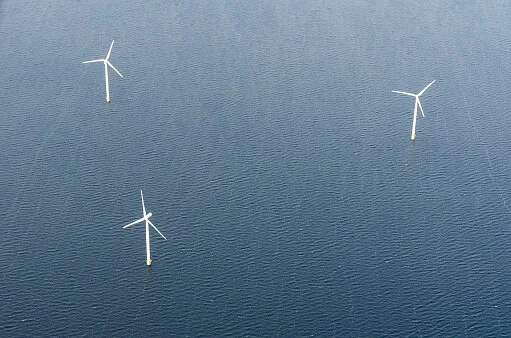
Vineyard Wind Selected to Deliver 804 MW of Clean Offshore Wind Power to Connecticut Electricity Customers
(New Bedford, MA) – Vineyard Wind released the following statement in response to today’s announcement by the Connecticut Department of Energy and Environmental Protection (DEEP) that the company’s proposed 804 megawatt (MW) Park City Project was selected in response to their 2019 solicitation for offshore wind facilities […]
December 5, 2019
(New Bedford, MA) – Vineyard Wind released the following statement in response to today’s announcement by the Connecticut Department of Energy and Environmental Protection (DEEP) that the company’s proposed 804 megawatt (MW) Park City Project was selected in response to their 2019 solicitation for offshore wind facilities.
“Vineyard Wind is proud that our Park City Wind proposal was selected in this competitive process and we are excited to work with Governor Lamont and DEEP to deliver jobs and economic development opportunities to the Bridgeport region and meaningful reductions in harmful carbon emissions,” said Lars Pedersen, CEO of Vineyard Wind. “Today’s announcement takes Connecticut one step closer to being the epicenter of the new offshore wind industry, with thriving ports in both Bridgeport and New London. We look forward to building on the work already underway with a network of project partners, local officials, the maritime community, other developers, and all stakeholders involved to make Connecticut a hub for the offshore wind industry in the United States for decades to come.”
Vineyard Wind is a joint venture of Avangrid Renewables, a subsidiary of AVANGRID Inc. (NYSE:AGR) which is majority owned by Iberdrola S.A., and Copenhagen Infrastructure Partners (CIP) each of which own 50 percent of Vineyard Wind.
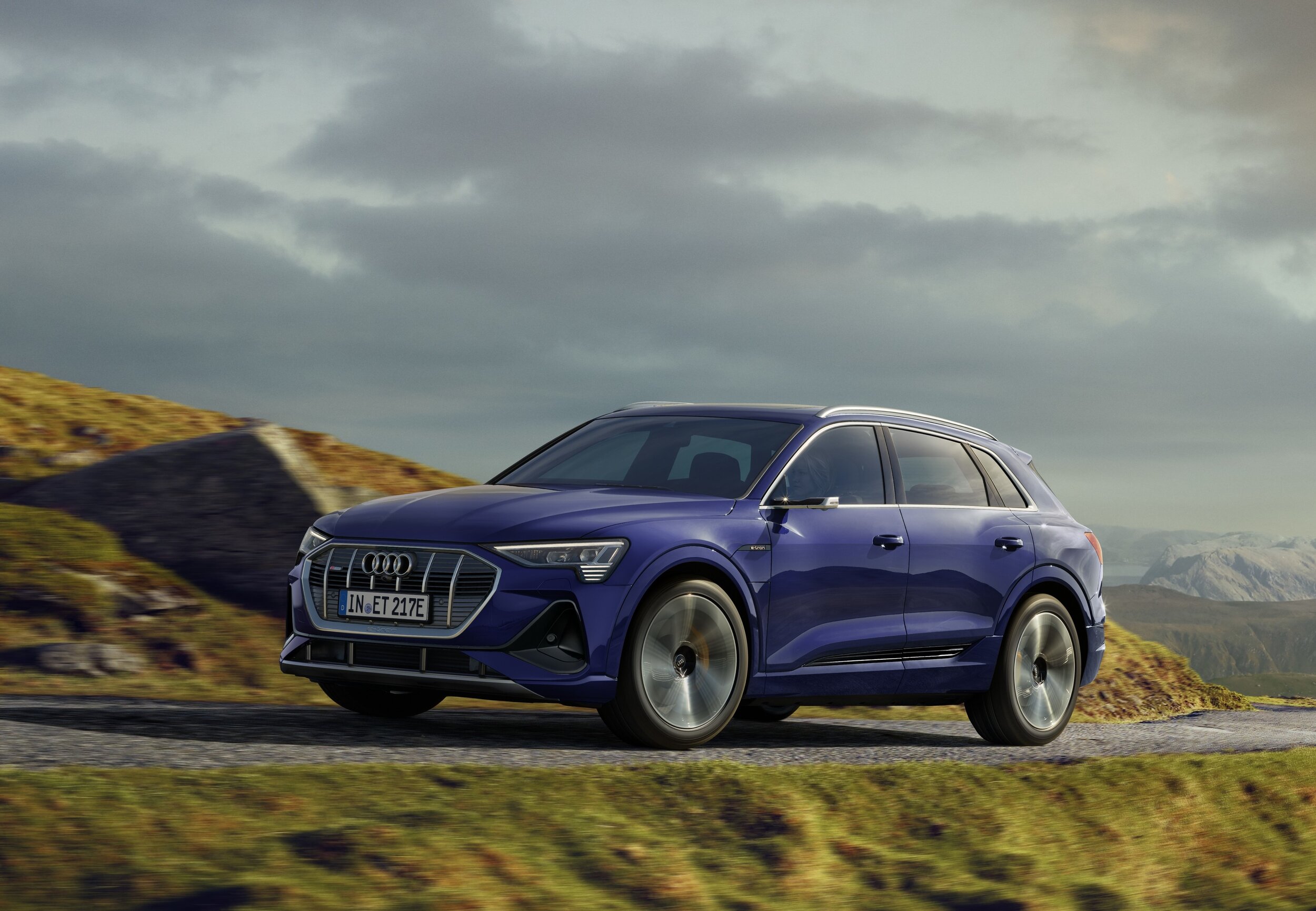
Better efficiency and longer range: technical update for the Audi e-tron
Just in time for the premiere of the e-tron Sportback**, Audi is introducing a standard technical update for its first electric product line. This combines optimized drive system hardware with software adjustments to improve efficiency. As a result, all versions of the e-tron SUV will come off the assembly line with an extra 25 kilometers (15.5 mi) or so of range. The new models are […]
November 28, 2019
Just in time for the premiere of the e-tron Sportback**, Audi is introducing a standard technical update for its first electric product line. This combines optimized drive system hardware with software adjustments to improve efficiency. As a result, all versions of the e-tron SUV will come off the assembly line with an extra 25 kilometers (15.5 mi) or so of range. The new models are available now to customers in Europe.
* Information on fuel/power consumption and CO2 emissions in ranges depending on the chosen equipment level of the car.
** The collective fuel consumption values of all models named and available on the German market can be found in the list provided at the end of this MediaInfo.
“Every detail counts” – that was the principle that engineers working on the Audi e-tron applied as they succeeded in extending its range yet further. Future versions of the Audi e-tron 55 quattro** will be able to drive for up to 436 kilometers (270.9 mi) on a full battery charge (WLTP cycle), which is an additional 25 kilometers (15.5 mi) over its previous capability. Thanks to a new type of wheel brake, the developers have achieved further reductions in what is known as residual brake torque. This refers to losses that occur as a result of the proximity of the brake calipers to the brake discs. The drive system has also become more efficient. In normal driving, the motor on the rear axle provides propulsion as standard. Now, thanks to a number of optimizations, the front electric motor is almost entirely disengaged and disconnected from the electricity supply. Only when the driver requests more power do both motors spring into action. Running without power or drag losses, the major advantage of the asynchronous motor concept, is even more effective as a result. In addition, the usable range of the high-voltage battery has increased. The battery in the Audi e-tron 55 quattro** has a total capacity of 95 kWh and now gives customers access to a net power figure of 86.5 kWh. All newly produced models will benefit from the technical upgrade. There is no change to prices for the Audi e-tron 55 quattro**, which start at €80,900.
Highly efficient thermal management
The engineers have also made improvements to cooling. The highly flexible thermal management system, which comprises four separate circuits, has been revised and now regulates the temperature of the high-voltage components even more efficiently. Volume flows in the coolant circuit have been reduced, which means that the pump uses less power. The sophisticated cooling system continues to guarantee rapid DC charging, a long battery life cycle and reproducible performance even under heavy loads. The standard heat pump harnesses waste heat from the high-voltage battery to keep the interior warm. Depending on the outside temperature, that can boost the Audi e-tron’s range by up to ten percent in customer operation.
Improved coasting recuperation
The innovative recuperation system contributes to up to 30 percent of overall range. The Audi e-tron can recover energy in two ways: by means of coasting recuperation when the driver releases the accelerator, or by means of braking recuperation when the brake pedal is depressed. In both cases, the electric motors function as generators and convert kinetic energy into electrical energy. During deceleration actions of up to 0.3 g – which applies to over 90 percent of such actions in everyday driving – the high-voltage battery is charged by the electric motors, which act as generators. The recuperation system provides for variable regulation of energy recuperation between both electric motors, both in coasting mode and during braking. The degree of coasting recuperation can be set to any of three stages by means of paddles on the steering wheel, and there are now greater distinctions between the three, which allows the driver the option of a more pronounced “one-pedal feeling.” When braking from 100 km/h (62.1 mph), the Audi e-tron can recuperate up to 300 Nm (221.3 lb-ft) and 220 kW. That corresponds to more than 70 percent of its operating energy input.
Sporty S line
The S line exterior package emphasizes the sporty DNA of the Audi e-tron. The new equipment version is available now and features 20-inch wheels and sport air suspension. The more distinctively contoured bumper is flanked by bigger and more expressive air curtains, which improve air flow. They extend below the headlights, thereby creating a dynamic appearance even from a distance. An S line emblem adorns the radiator grille, while the illuminated aluminum door sill trims feature an #S logo. The spoiler fitted as standard and a striking diffuser at the rear contribute to the outstanding aerodynamics of the e-tron Sportback. In contrast to the basic model, the attachments on the S line exterior are painted in the exterior body color, including the wheel arch trims, door sills, bumpers and exterior mirrors. The optional black styling package also accentuates the area of the Singleframe, the side windows and the bumper. The exterior mirror housings are also available in black as an option.
Second output level
At market launch of the e-tron Sportback, Audi will be offering a second motor variant. The e-tron 50 quattro**, available as an SUV or Sportback coupé, delivers 230 kW of power and 540 Nm (398.3 lb-ft) of torque (combined electric power consumption in kWh/100 km (62.1 mi)*: 26.6 – 21.6 (WLTP); 24.3 – 21.4 (NEFZ); combined CO2 emissions in g/km: 0). The model can accelerate from 0 to 100 km/h (62.1 mph) in 6.8 seconds and has a top speed of 190 km/h (118.1 mph). The battery comprises 27 modules, each with twelve prismatic cells. The system is roughly 120 kilograms (264.6 lb)lighter than the one in the sister model and provides 71 kWh of gross power (64.7 kWh net). As a result, the Audi e-tron 50** can cover up to 336 kilometers (208.8 mi) on a full charge in the WLTP cycle, while the Sportback version can reach 347 kilometers (215.6 mi) thanks to its streamlined body. The Audi e-tron 50 quattro** is available now starting from €69,100, while prices for the Audi e-tron Sportback 50 quattro** begin at €71,350. As a result, both models qualify for the Umweltbonus subsidy offered in Germany.
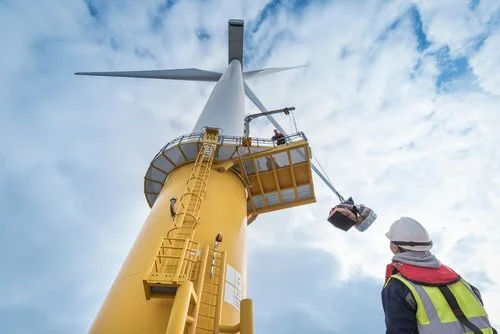
New England Offshore Wind Leaseholders Submit Uniform Layout Proposal to the U.S. Coast Guard
The five New England offshore wind leaseholders - Equinor, Mayflower Wind, Ørsted/Eversource, and Vineyard Wind- announced a uniform turbine layout proposal submitted to the U.S. Coast Guard with 1 nautical mile (nm) spacing between wind […]
November 19, 2019 – The five New England offshore wind leaseholders - Equinor, Mayflower Wind, Ørsted/Eversource, and Vineyard Wind- announced a uniform turbine layout proposal submitted to the U.S. Coast Guard with 1 nautical mile (nm) spacing between wind turbines.
The companies issued the following joint statement:
“In response to feedback from key stakeholders, we have proposed to adopt a uniform turbine layout across our adjacent New England lease areas. This uniform layout has subsequently been proposed to the United States Coast Guard (USCG) for its review.
This uniform layout is consistent with the requests of the region’s fisheries industry and other maritime users. The proposed layout specifies that turbines will be spaced 1 nautical mile (nm) apart, arranged in east-west rows and north-south columns, with the rows and columns continuous across all New England lease areas. In addition, independent expert analysis provided to the USCG confirmed that this uniform layout would provide for robust navigational safety and search and rescue capability by providing hundreds of transit corridors to accommodate the region’s vessel traffic.
We look forward to continuing to work with the USCG, the Bureau of Ocean Energy Management, coastal states, the fisheries industry, and other stakeholders involved to ensure continued coexistence of every ocean user in the region, including offshore wind.”
A uniform layout reflects considerable written and oral public comments from New England maritime stakeholders and will allow mariners to safely transit from one end of the New England Wind Energy Area (NE WEA) to the other without unexpected obstacles.
The five New England offshore wind leaseholders’ proposal to the USCG addresses four principal concerns: (1) navigation safety; (2) the fisheries community’s request for uniform and consistent spacing between turbines throughout the NE WEA; (3) creation of distinct transit corridors; and (4) the facilitation of search and rescue operations conducted by both vessel and aircraft.
The New England offshore wind leaseholders also submitted a report prepared by W.F. Baird & Associates Ltd. to the United States Coast Guard that analyzes the uniform layout using international vessel safety guidelines. W.F. Baird & Associates Ltd. is a leading vessel and port safety consultant and their analysis was based on automatic identification system (AIS) data between 2017 and 2018.
The key findings in their report include:
Most traffic in the general region is transiting around, or along the outside edges, of the NE WEA;
Most of the transiting vessels are fishing vessels, and they follow a wide range of transit paths through the NE WEA as they are coming from several different ports and heading to a variety of fishing grounds;
Vessels up to 400’ length can safely operate within the proposed 1x1 nm layout, and historic transit data shows vessels over this length tend to follow existing Traffic Separation Schemes already outside the NE WEA;
The uniform 1x1 nm layout will provide ample navigation transit corridors throughout the NE WEA.
Given the many advantages of the proposed 1x1 nm regional layout, the New England lease holders are proud to be working together to present a collaborative solution that they believe accommodates all ocean users in the region. The proposal is a result of the distinct solution and response to specific challenges in New England and would not be applicable to offshore wind leases in other geographies where challenges are different.

My Climate Journey Episode 44: Emily Reichert, CEO of Greentown Labs
Today’s guest is Emily Reichert, CEO of Greentown Labs. Dr. Emily Reichert serves as Chief Executive Officer of Greentown Labs, the largest clean technology startup incubator in the United States. As the company’s first employee, Emily has spearheaded the rapid growth of Greentown Labs into a global center for clean technology innovation, attracting visitors and partners from around the world […]
Read Full Article or Listen to Podcast Here
October 10, 2019
Today’s guest is Emily Reichert, CEO of Greentown Labs.
Dr. Emily Reichert serves as Chief Executive Officer of Greentown Labs, the largest clean technology startup incubator in the United States. As the company’s first employee, Emily has spearheaded the rapid growth of Greentown Labs into a global center for clean technology innovation, attracting visitors and partners from around the world.
Emily started her career at Arthur D. Little as a Ph.D. scientist and progressed into R&D, business development and general management roles. Prior to Greentown Labs, she was the Director of Business Operations at the Warner Babcock Institute for Green Chemistry where she helped grow the angel-funded startup into a sustainable contract R&D business with a mission to minimize environmental impact of chemical products. Emily also served as a MIT Sloan Fellow in Innovation and Global Leadership as well as a Venture Labs Fellow at Flagship Ventures, a Boston-based Venture Capital firm.
Emily has served as a board member or as a key advisor for a number of innovation and entrepreneurship-focused organizations including the Northeast Clean Energy Council, Cleantech Open Northeast, Cyclotron Road, the Incubatenergy Network and the MIT Enterprise Forum. She has been appointed to leadership positions on innovation, economic development, entrepreneurship and clean technology commercialization at both the state and federal level including Massachusetts Governor Charlie Baker’s Economic Development Planning Council and the U.S. Secretary of Commerce’s National Advisory Council on Innovation and Entrepreneurship.
Emily has earned international recognition for her leadership in cleantech innovation and has received invitations to speak at International Conferences such as Les Rencontres Economiques d’Aix-en-Provence, France, and the Fish Family Foundation’s Japanese Women’s Leadership Initiative in Tokyo, Japan.
She holds a Ph.D. in Physical Chemistry from the University of Wisconsin-Madison and earned her MBA from MIT Sloan School of Management.
When Emily isn’t at Greentown Labs, you’ll likely find her traveling the world with her husband, Chris Nielsen. As an avid outdoorswoman, Emily has experienced adventures in many corners of the globe including, tree-climbing in the Amazon, swimming with sea turtles off the island of Fernando de Noronha, climbing Mt. Kilimanjaro, trekking the Andes of Ecuador, and cycling along the Danube River bend north of Budapest […]

CleanChoice Energy Named to Inc. 5000 List of Fastest-Growing Private Companies for Third Consecutive Year
CleanChoice Energy, a renewable energy company that empowers people and businesses to cut emissions and live cleaner lives, has been named to Inc. Magazine's list of the 5000 fastest-growing private companies in the U.S. for the third consecutive year. The Inc. Magazine 5000 is one of the most prestigious rankings of fastest-growing private companies in the […]
August 22, 2019
WASHINGTON, Aug. 21, 2019 -- CleanChoice Energy, a renewable energy company that empowers people and businesses to cut emissions and live cleaner lives, has been named to Inc. Magazine's list of the 5000 fastest-growing private companies in the U.S. for the third consecutive year. The Inc. Magazine 5000 is one of the most prestigious rankings of fastest-growing private companies in the nation.
"We are excited that CleanChoice Energy has ranked among the fastest-growing private companies in the nation for three straight years," said Tom Matzzie, Founder and CEO of CleanChoice Energy. "Our innovative approach helps satisfy consumers' increasing demand for clean electricity by offering customers an easy and convenient way to source 100% clean, pollution-free energy."
"The companies on this year's Inc. 5000 have followed many different paths to success," said Inc. Editor-in-chief James Ledbetter. "There's no single course you can follow or investment you can take that will guarantee this kind of spectacular growth. But what they have in common is persistence and seizing opportunities."
CleanChoice Energy offers 100 percent renewable energy products to American homes and businesses. CleanChoice customers have avoided more than 4 billion pounds of carbon dioxide emissions and provided over $2 million in funding to leading nonprofits and social impact organizations.
Complete results of the Inc. 5000, including company profiles and an interactive database that can be sorted by industry, region, and other criteria, can be found at www.inc.com/inc5000.
CleanChoice Energy empowers people and businesses to cut emissions, support renewable energy, and live cleaner lives. Founded in 2012, the company has become one of the fastest-growing businesses in America, as ranked on the Inc. 5000 and Deloitte's Technology Fast 500™. CleanChoice Energy is a Certified B Corporation and is certified with the highest available rating by Green America's Green Business Network. For more information or to become a customer, visit CleanChoiceEnergy.com.
Inc. Media
Founded in 1979 and acquired in 2005 by Mansueto Ventures, Inc. is the only major brand dedicated exclusively to owners and managers of growing private companies, with the aim to deliver real solutions for today's innovative company builders. The 2019 Inc. 5000 is ranked according to percentage revenue growth when comparing 2015 and 2018.
How Greentown Labs became the epicenter of clean tech
Greentown Labs is the largest clean technology incubator in North America, a fact that’s easy to accept when you walk inside. The massive, open entrance of Greentown’s Somerville, Massachusetts, headquarters gives visitors the impression they’ve entered the office of one of Greater […]
By Zach Winn
Image by Barry Hetherington
June 25, 2019
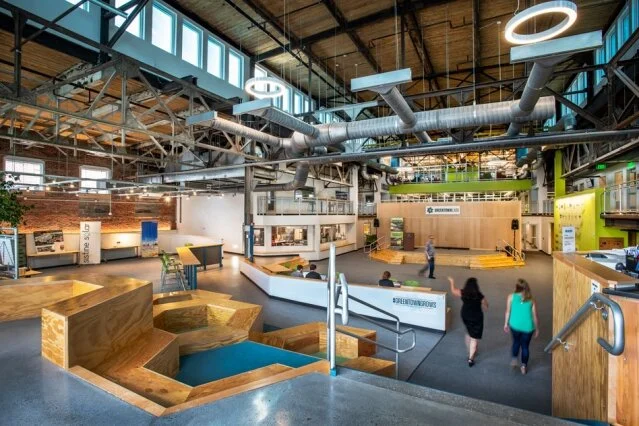
Greentown Labs is the largest clean technology incubator in North America, a fact that’s easy to accept when you walk inside. The massive, open entrance of Greentown’s Somerville, Massachusetts, headquarters gives visitors the impression they’ve entered the office of one of Greater Boston’s most successful tech companies.
Beyond the modern entryway are smaller working spaces — some cluttered with startup prototypes, others lined with orderly lab equipment — to enable foundational, company-building experiments.
In addition to the space and equipment, Greentown offers startups equity-free legal, information technology, marketing, and sales support, and a coveted network of corporations and industry investors.
But what many entrepreneurs say they like most about Greentown is the people.
“Greentown offers a lot of different things, but first and foremost among them is a community of entrepreneurs who are striving to solve big challenges in climate, energy, and the environment,” says Greentown Labs CEO Emily Reichert MBA ’12.
Greentown is full of stories of peers bumping into each other in the kitchen only to find they’re struggling with similar problems or, even better, that one of them already grappled with the problem and found a solution.
MIT has played a pivotal role in Greentown’s success since its inception. Reichert estimates about 60 percent of all the companies that have come through Greentown have direct ties to MIT.
The current version of Greentown looks like the result of some well-funded, grand vision set forth long ago. But Greentown’s rise was every bit as spontaneous — and tenuous — as the early days of any startup.
A space for building
In 2010, Sorin Grama SM ’07 and Sam White were looking for office space to work on a new chiller design for their startup, Promethean Power Systems, which still develops off-grid refrigeration systems in India. They needed a place to build the big, leaky refrigeration prototypes they’d thought up. It also needed to be close to MIT, where the company founders connected with advisors and interns.
Eventually, White found “a dilapidated warehouse” on Charles Street in Cambridge for the right price. What the space lacked in beauty it made up for in size, so the founders decided to use an MIT email list to see if other founders would like to join them. Some founders building an app were first to respond. Their first reaction was to ask White and Grama to clean up a bit, and they were politely shown the door.
Without exactly intending to, Grama and White had made their warehouse a builder space. Over the next week, a few more founders came in, including Jason Hanna, the co-founder of building efficiency company Embue; Jeremy Pitts SM ’10, MBA ’10, who was creating more efficient compressor systems for the oil and gas industry as the founder of Oscomp Systems; and Adam Rein MBA ’10 and Ben Glass ’07 SM ’10, whose company Altaeros was building airborne wind turbines. The warehouse looked perfect to them.
“What we all had in common was we just needed a space to prototype and build stuff, where we could spill stuff, make noise, and share tools,” Grama says. “Pretty quickly it became a nice band of startups that appreciated the same thing.”
The winter of 2010-2011 was a freezing one in the warehouse, made worse by icy cement floors, but the founders couldn’t help but notice the benefits of working together. Any time an intern or investor came to see one company, they were introduced to the others. Founders with expertise in areas like grant writing or funding rounds would give lunchtime presentations to help the others.
Rein remembers thinking he was in the perfect environment to succeed despite the sometimes comical dysfunction of the space. One day an official with the United States Agency for International Development (USAID) stopped by to evaluate one of the startups for a grant. The visit went well enough — until she got locked in the bathroom. The founders eventually got her out, but they didn’t think the incident boded for their chances of getting that grant.
When the landlord kicked them out of Charles Street, they found a similar space in South Boston, recruiting friends and employees to help strip wires, scrape walls, and paint over the course of a week. Rein recalls his regular duties included ordering toilet paper for the building.
The space was also twice as large as the one in Cambridge, so as Greentown’s reputation spread throughout 2011, five startups became 15, then 20.
“It really took on a life of its own,” Grama says.
Among the curious MIT students who journeyed to Greentown that year was Reichert. Having worked as a chemist for 10 years in spotless, safety-certified labs before coming to MIT, she was shocked to see the condition of Greentown.
“The first time I walked in I had two gut reactions,” Reichert says. “The first was I felt this amazing energy and passion, and kind of a buzzing. If you walk into Greentown today you still feel those things. The second was, ‘Oh my god, this place is a death trap.’”
After earning her MBA, Reichert initially helped out as a consultant at Greentown. By February of 2013, she joined Greentown to run it full time. It was a critical time for the growing co-op: White and Grama were getting ready to move to India to work on Promethean, and Hanna, who had primarily led Greentown to that point, was expecting the birth of his first child.
At the same time, real estate prices in South Boston were skyrocketing, and Greentown was again being forced to move.
Reichert, who worked as CEO without a salary for more than a year, remembers those first six months on the job as the most stressful of her life. With no money to put toward a new space, she was able to partner with the City of Somerville to secure some funding and find a new location. Reichert signed a construction contract to renovate the Somerville space before she knew where the money would come from, and began lobbying state and corporate officials for sponsorships.
She still remembers the day Greentown was to be evicted from South Boston, with everyone scrambling to clean out the cluttered warehouse and a few determined founders running one last experiment until 7 p.m. before throwing the last of the equipment in a U-Haul truck and beginning the next phase of Greentown’s journey.
Growing up
Within 15 months of the move to Somerville, Greentown’s 40,000 square feet were completely filled and Reichert began the process of expanding the headquarters.
Today, Greentown’s three buildings make up more than 100,000 square feet of prototyping, office, and event space and feature a wet lab, electronics lab, and machine shop.
Since its inception, Greentown has supported more than 200 startups that have created around 2,800 jobs, many in the Boston area.
The original founders still serve on Greentown’s board of directors, ensuring every dollar Greentown makes goes toward supporting startups.
Of the founding companies, only Promethean and Altaeros are still housed in Greentown, although they’re all still operating in some form.
“We probably should’ve moved out, but it’s important to work in a place you really enjoy,” Rein says of Altaeros.
Grama, meanwhile, has come full circle. After ceding the reigns of Promethean and returning from India, last year he started another company, Transaera, that’s developing efficient, environmentally friendly cooling systems based on research from MIT.
This time, it took him a lot less time to find office space.
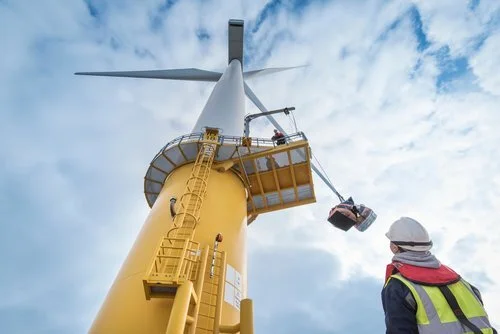
Vineyard Wind Celebrates Opening of Permanent Boston Office
Vineyard Wind, which is developing the United States’ first-utility-scale wind farm, celebrated the opening of a permanent Boston office yesterday. Vineyard Wind’s new, larger workplace, located in Boston’s historic Back Bay neighborhood, will accommodate the company’s growing staff and provide a range of services, including […]
June 19, 2019
(New Bedford, MA; June 19, 2019) – Vineyard Wind, which is developing the United States’ first-utility-scale wind farm, celebrated the opening of a permanent Boston office yesterday. Vineyard Wind’s new, larger workplace, located in Boston’s historic Back Bay neighborhood, will accommodate the company’s growing staff and provide a range of services, including contractor management, regulatory affairs, financing and similar activities needed to support construction of a proposed offshore wind farm that will be located 15 miles south of Martha’s Vineyard, as well as other projects in earlier stage of development.
The event featured a ribbon-cutting and remarks by Massachusetts Governor Charlie Baker, AVANGRID CEO James P. Torgerson and Vineyard Wind CEO Lars Pedersen.
The 800-megawatt (MW) wind farm now under development by Vineyard Wind, which will be the first utility-scale wind farm in the United States, remains on schedule to begin on-shore construction in 2019 and become operational by 2022. Vineyard Wind’s proposed project was selected through a competitive process in May 2018 to provide clean, wind energy to customers of Massachusetts’ three electric distribution utilities. The contracts between the utilities and Vineyard Wind have been approved, and the project is on track to provide enough wind energy to serve over 400,000 homes throughout the Commonwealth. The Vineyard Wind project continues to move ahead with public and regulatory review through more than 25 federal, state, and local approval processes. These include US Bureau of Ocean Energy Management (federal Environmental Impact Statement), Massachusetts Department of Environmental Protection and Coastal Zone Management, as well as local and regional conservation commissions.
Vineyard Wind, Conservation Groups Reach Historic Agreement to Protect Right Whales
Vineyard Wind and the Natural Resources Defense Council, the National Wildlife Federation, and Conservation Law Foundation today entered into an unprecedented agreement to protect critically endangered North Atlantic right whales. Under the historic agreement, Vineyard Wind will institute […]
January 23, 2019
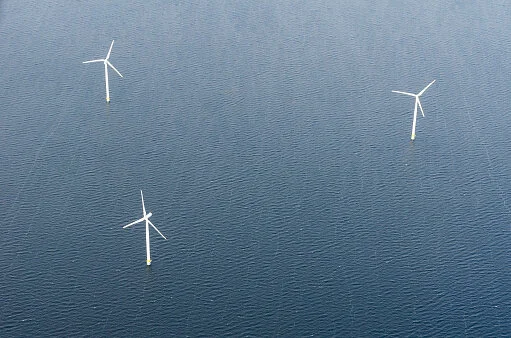
BOSTON – Vineyard Wind and the Natural Resources Defense Council, the National Wildlife Federation, and Conservation Law Foundation today entered into an unprecedented agreement to protect critically endangered North Atlantic right whales.
Under the historic agreement, Vineyard Wind will institute a variety of protective measures to keep right whales safe while installing and operating turbines at its proposed 84-turbine project off the coast of Massachusetts. Harnessing offshore wind is a key step in transitioning the nation away from dirty, polluting fossil fuels to a clean energy economy.
“Scaling up offshore wind in wildlife-friendly ways is essential to confronting the climate crisis,” said Collin O’Mara, president and CEO of the National Wildlife Federation. “By ensuring that offshore wind power is responsibly built and operated, this model agreement is a win-win for conserving wildlife and creating well-paying jobs. We are proud to work with Vineyard Wind and our conservation partners to protect endangered North Atlantic right whales as this critically needed new clean energy industry takes off in the United States.”
(There will be a telepresser on the agreement at 1 p.m. today. Email eheyd@nrdc.org for details.)
Turbine construction will be curtailed in the winter and early spring when the North Atlantic right whales may be in the area, and there will be comprehensive monitoring to ensure that construction doesn’t take place when the whales are near the site. Vineyard Wind will dampen construction noise that disturbs the whales’ ability to communicate, find food and stay on their migratory path. The agreement also includes strict vessel speed limits.
“This innovative agreement is proof that we can grow the clean energy we need to power our homes and businesses and at the same time protect vulnerable wildlife like the iconic North Atlantic right whale,” said Nathanael Greene, Senior Renewable Energy Advocate at NRDC.
“As we ask more of our oceans, we must ensure that we balance the critical need for clean energy with the protection of our majestic right whales and other marine species,” added Dr. Priscilla Brooks, Director of Ocean Conservation at CLF. “This agreement marks a significant step forward in responsible development of offshore wind energy.”
The full agreement is available here.
When complete, the Vineyard Wind facility will consist of more than 80 turbines capable of generating 800 megawatts of electricity, enough power for more than 400,000 homes. (More information on the project area can be viewed here.)

“Throughout development of the project, Vineyard Wind has strived to work with all stakeholders to proactively resolve potential issues and design the best project possible. It has been especially gratifying to work with these leading environmental groups in developing enhanced protections for right whales during all phases of what will be the nation’s first utility-scale offshore wind project,” said Erich Stephens, Chief Development Officer of Vineyard Wind.
Vineyard Wind will further invest $3 million to develop and deploy innovative technologies and undertake scientific research to further safeguard the marine mammals.
Barely 400 right whales remain on the planet. For decades, the North Atlantic right whale has been harmed by many existing marine uses, including entanglement with fishing gear and vessel collisions. The right whale protections announced today provide an important template other offshore wind projects should consider.
This agreement comes at a pivotal moment: After nearly 30 years of commercial advancement in Europe, U.S. offshore wind development is poised to surge over the next decade. While only five offshore wind turbines are operating now on this side of the Atlantic, states are mobilizing to bring offshore wind power online. Collectively these states have committed to develop 15 GW of offshore wind power, enough to provide clean, renewable power for 5 million homes.
Wind turbine company picks Boston for US HQ
By Jon Chesto Boston — This country’s nascent offshore wind industry doesn’t yet have its own capital city. But Boston could be in the best position of any place to earn that title. Boston’s reputation gets a significant boost on Friday when executives at MHI Vestas Offshore Wind meet with Governor Charlie Baker to announce […]
January 11, 2019 5:49 pm
By Jon Chesto
Image by Tristan Stedman - MHI Vestas Offshore Wind
Boston — This country’s nascent offshore wind industry doesn’t yet have its own capital city. But Boston could be in the best position of any place to earn that title.
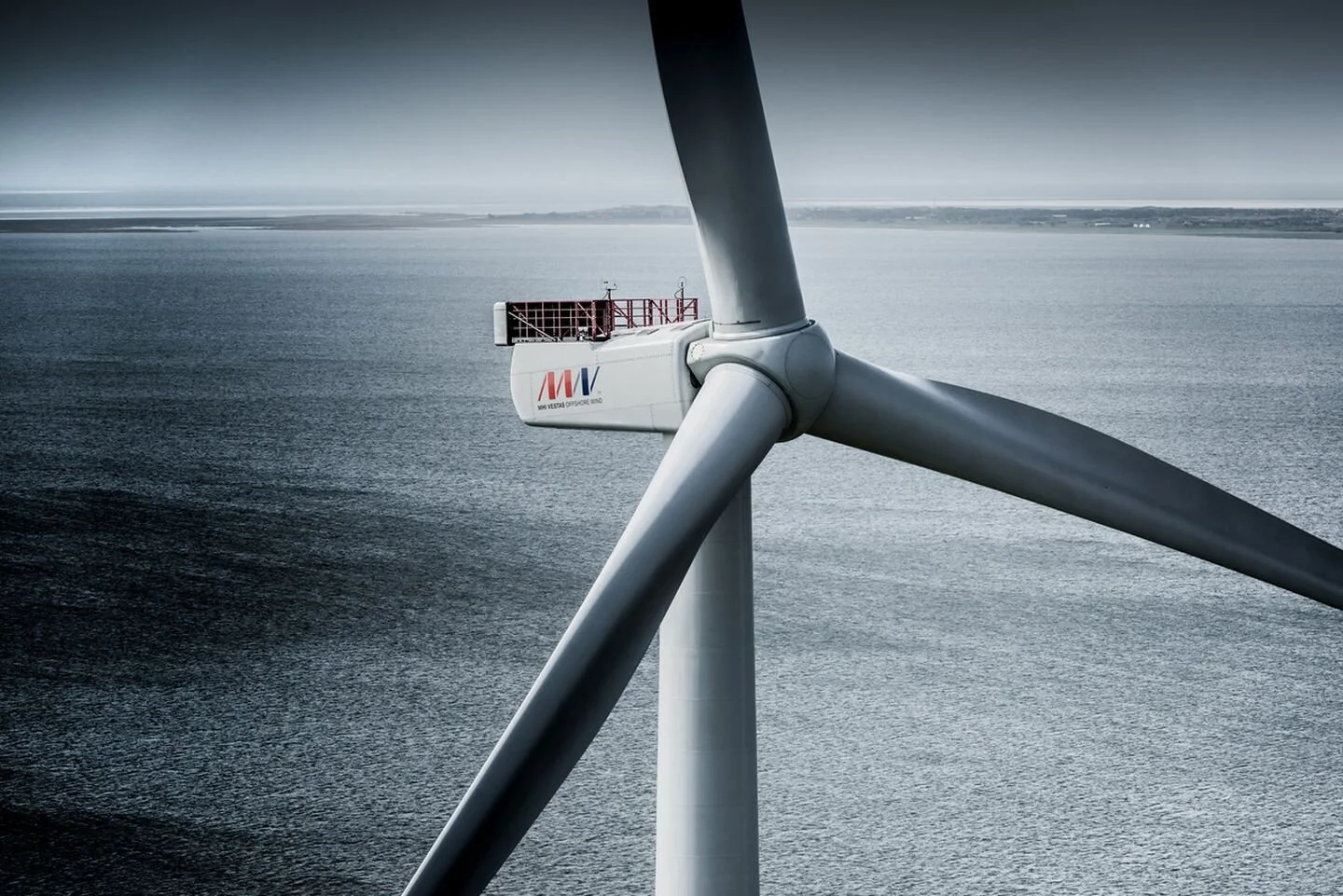
Boston’s reputation gets a significant boost on Friday when executives at MHI Vestas Offshore Wind meet with Governor Charlie Baker to announce plans for the Danish turbine manufacturer to put its US headquarters here.
The new office will be small at first, just a handful of staffers. Employment will grow over time, along with the sector. But its opening is important symbolically, the kind of move that can build momentum by encouraging others to take a look.
The precipitating event: a 2016 state law that requires utilities to buy up to 1,600 megawatts of offshore wind power. Vineyard Wind was picked in May to develop an 800-megawatt wind farm south of Martha’s Vineyard. In November, the developer said it chose MHI Vestas as its preferred turbine supplier; the project would consist of 84 turbines made by MHI Vestas, with blades reaching as high as 600 feet in the sky.
Around the same time, MHI Vestas hired Jason Folsom away from rival Siemens Gamesa to be its national sales director, making him the company’s first US hire. Folsom plans to relocate from Florida to run the new office. He says he hasn’t picked a Boston site yet, but wants to open one within the next three months.
While Folsom says the company considered other US cities, the offshore wind market is furthest along in Massachusetts. Vineyard Wind, a venture backed by two European companies, is trying to get permits lined up this year, with a goal of plugging into the grid in 2021. Vineyard Wind would become the country’s first major offshore wind farm, although Deepwater Wind opened a five-turbine project off Block Island two years ago.
MHI Vestas’ arrival echoes another Danish company’s move. Orsted, then known as Dong Energy, opened an office here four years ago; it now serves as Orsted’s US headquarters. Like MHI Vestas, Orsted was drawn by Massachusetts’ “first mover” advantage. Orsted is aiming to develop a wind farm off Martha’s Vineyard with Eversource and uses Boston, where it now employs more than 40 people, as a base to bid on offshore projects in other East Coast locations. Orsted officials like the access in Boston to the universities, the tech workforce, and Logan Airport. (Orsted also expanded to Providence with its recent acquisition of Deepwater.)
The real economic boon will arrive when construction begins — by the end of the year, if all goes according to Vineyard Wind’s plan. The turbines will be manufactured in Europe. But hundreds of people will be put to work at a staging area in New Bedford, and in the water.
Another 800 megawatts of offshore wind capacity will go out to bid by July. With that in mind, Vineyard Wind and two other developers with ties to European companies won a spirited competition last month for lease rights to build in deeper waters, further south of the Vineyard.
New York and New Jersey are close behind: Both states recently set their own offshore wind contests in motion, for 800 and 1,100 megawatts of capacity, respectively. Bids are already in for the New Jersey solicitation; they’re due next month in New York.
The race is on to become the go-to place for offshore wind, to build a critical mass for a sustainable industry. For now, at least, the arrival of MHI Vestas should help solidify Massachusetts’ head start.

With Vineyard Wind, the U.S. Finally Goes Big on Offshore Wind Power
The 800-megawatt Vineyard Wind project is the first large offshore wind farm in the U.S. It won’t be the last Sometime in 2019, construction on Vineyard Wind, the first major offshore wind farm in the United States, will begin. Workers will start prepping a pair of undersea substations to be installed about 55 kilometers south […]
The 800-megawatt Vineyard Wind project is the first large offshore wind farm in the U.S. It won’t be the last
Sometime in 2019, construction on Vineyard Wind, the first major offshore wind farm in the United States, will begin. Workers will start prepping a pair of undersea substations to be installed about 55 kilometers south of the Massachusetts mainland. A specially equipped trawler will lay undersea transmission cable between the site and a landfall on Cape Cod. The cable will connect to the switching station in Barnstable, and from there to the New England power grid.
Meanwhile, the first of 84 wind turbines, 9.5 megawatts each, from MHI Vestas will be shipped to the site and installed in an array that will populate a 650-square-kilometer expanse and generate some 800 MW. The exact timetable for all that work is uncertain, though. The developers—Copenhagen Infrastructure Partners and Avangrid Renewables—declined to be interviewed for this story.
The most remarkable thing about Vineyard Wind isn’t its size or scope or the fact that it’s a first for the United States. It’s the 7.4 U.S. cents per kilowatt-hour price that Vineyard Wind has agreed to charge for the wind farm’s electricity. In the project’s second phase, the price will drop to just 6.5 cents, making it competitive with coal and natural gas, but without the carbon emissions. For comparison, electricity from the tiny five-turbine, 30-MW Block Island wind farm, which became operational in 2016 off the coast of Rhode Island, is priced at 24.4 cents per kilowatt-hour.
“Vineyard Wind’s price is a game changer,” says Bill White, who spoke to IEEE Spectrum in September, when he was senior director of offshore wind development at the Massachusetts Clean Energy Center. (In October White joined the German renewable energy firm EnBW.) “Offshore wind is good for [combatting] climate change. It creates jobs. It meets the need for more electricity as the Northeast’s power-generation fleet ages. Offshore wind has been a no-brainer—except on cost. Now, cost has almost been taken off the table.”
The U.S. offshore wind market has been a long time coming, says Walt Musial, manager of offshore wind at the National Renewable Energy Laboratory (NREL). He’s worked on wind power for 35 years, so he’s intimately familiar with the technical, economic, regulatory, and, above all, political hurdles that have stymied U.S. efforts, even as other countries embraced the technology.
Epitomizing those struggles was Cape Wind, which was to be built off the coast of Cape Cod. Proposed in 2001, it won local, state, and federal approvals and major financial backing. But it also faced years of legal challenges from people concerned about how the turbines, which would be visible from shore, would affect the area’s scenic beauty and wildlife. Finally, in 2017, the developers canceled the project.
“It was death by a thousand cuts,” Musial says. “But in a way Cape Wind was the leader. We learned a lot, and now the industry is on track.”
The Massachusetts Clean Energy Center helped ensure that Vineyard Wind’s fate didn’t mirror Cape Wind’s. “We recognized that offshore wind would come to Massachusetts but that there were obstacles, so…we’ve been doing all this work to get ready,” White says.
That work included environmental surveys, planning for transmission lines, and funding a study of gray whales, which may be affected by wind farm construction. Massachusetts spent $100 million upgrading its New Bedford Marine Commerce Terminal, to allow it to handle massive turbine components. Despite such preparatory efforts, at press time local fishermen were protesting the project, upset over the positioning of the turbines.
Turbine technology has evolved considerably since Cape Wind’s time, Musial notes. “Back in 2003, we couldn’t place turbines south of Martha’s Vineyard. Now we can.” Cape Wind’s turbines were to be 3.6 MW. “Now turbines are more than twice that size, which means you need fewer of them.” Though the turbines are also taller, they’ll be farther from shore.
Vineyard Wind is only the first of a number of large U.S. offshore wind projects in the works. Next to the Vineyard Wind site are several other sites leased to Deepwater Wind (recently purchased by the Danish company Ørsted) and to Bay State Wind (a partnership of Ørsted and the transmission company Eversource). In mid-December, the U.S. Bureau of Ocean Energy Management announced the winners of three additional leases in that area: Norway’s Equinor; Mayflower Wind Energy (a joint venture of Shell and EDP Renewables); and Vineyard Wind.
Meanwhile, New Jersey is soliciting 1,100 MW of offshore wind capacity, the largest ever for a U.S. state, with an eventual 3,500 MW by 2030. New York state has set a goal of 2,400 MW of offshore wind by the same year.
Elsewhere in the world, France, Taiwan, and Vietnam have invested heavily in offshore wind, joining the likes of China, Germany, and the United Kingdom. The total installed capacity of offshore wind is projected to reach 115 gigawatts by 2030, a sixfold increase from 2017, according to Bloomberg New Energy Finance.
And new technologies continue to be deployed, including floating turbines, for use in deeper water where turbines can’t be directly anchored in the ocean floor, and telescopic turbine towers, which can be fully assembled onshore, towed to the site, and then extended.
“We spent years doing site development, industry cultivation, meeting with regulators,” NREL’s Musial says. “It’s finally paying off.”

The Sox moving top farm team from Pawtucket to Worcester
Ending a protracted search for a new home, the Pawtucket Red Sox said Friday that they had signed a deal to move to Worcester, ending an era for the minor league affiliate in Rhode Island that dates back to 1973. PawSox chairman Larry Lucchino said the team signed a letter of intent with the city to build a nearly $90 million, 10,000-seat stadium that would be […]
By Jon Chesto
Image by John Tlumacki
August 18, 2018
WORCESTER — Ending a protracted search for a new home, the Pawtucket Red Sox said Friday that they had signed a deal to move to Worcester, ending an era for the minor league affiliate in Rhode Island that dates back to 1973.
PawSox chairman Larry Lucchino said the team signed a letter of intent with the city to build a nearly $90 million, 10,000-seat stadium that would be open for baseball in 2021. He will once again partner on the stadium project with Janet Marie Smith, with whom he worked on the construction of Oriole Park at Camden Yards and renovations to Fenway Park when the two worked for the Boston Red Sox.
“We look forward . . . to having a hell of a ride with Worcester,” Lucchino told a crowd gathered at City Hall to herald the deal.
The team will be renamed the Worcester Red Sox and the stadium will be called Polar Park, after hometown beverage maker Polar Beverages, which struck a deal for the name. Lucchino said WooSox is one possibility as a nickname.
Located on an empty site once occupied by metal parts maker Wyman-Gordon in Worcester’s Canal District, the stadium would be owned by the city, which would borrow $100 million to finance construction. The bonds would be paid
off by rent from the team, and from a special taxation district the city would establish to capture tax revenue at the ballpark and nearby properties.
The state would provide $32.5 million in assistance for infrastructure improvements, and another $2.5 million in housing tax credits that would assist the broader redevelopment that is part of the stadium project. Developer Denis Dowdle, of Madison Properties in Boston, plans to build a mixed-use project with two hotels, apartments, restaurants, and shops, just south of the ballpark within the 18-acre taxation district.
Worcester and state officials also pledged to fix nearby Kelley Square, one of the most congested intersections in the city. The move is subject to league and local approvals, including a city council vote that’s needed for the arrangement with the team.
The decision is a blow for Pawtucket, a struggling city that was recently hit by the closure of Memorial Hospital. Toy company Hasbro has been mulling whether to renovate its headquarters in the city or to relocate, perhaps to Providence. McCoy Stadium in Pawtucket dates back to 1942, and it hosted countless Red Sox stars of the future since the Triple A affiliate began playing there in 1973. It was the location of professional baseball’s longest game, a 33- inning affair against the Rochester Red Wings in 1981 played over two days.
Though updated over the years, McCoy lacks the amenities sought by a new ownership group that took over in 2015 and included Lucchino, then-chief executive of the Boston Red Sox. Many in the area fondly recall McCoy Stadium as a place of family nights, Little League outings, and cheap dinners of hot dogs and soda. Steven and Dawn Porter, who own a bookstore in Pawtucket, said the city is losing a crucial piece of its identity.
“It’s a big fish for Rhode Island to let go of,” Dawn Porter said.
Officials in Rhode Island had made multiple efforts over the years to keep the team in the state. Most recently, Pawtucket Mayor Don Grebien pushed for a new stadium at the site of the old Apex department store building along the Blackstone River, part of his broader effort to revitalize the city’s downtown. That plan hinged on an $83 million financing plan, but the measure passed by Rhode Island’s General Assembly in June failed to include a state backstop for the bonds. Lucchino said the lack of that in Rhode Island caused significant uncertainty in the project’s overall financing costs, and was a key reason for considering Worcester.
Grebien issued a statement bemoaning the team’s departure, saying that secret negotiations and “substantial subsidies” from Worcester and the state of Massachusetts led to the decision to rip the team “out of its rightful home.”
“The PawSox do not make Pawtucket,” Grebien said. “Pawtucket made the PawSox.”
For Worcester, New England’s second-largest city, luring the PawSox is another step forward in its revival. But the stadium doesn’t come without risk: the city has agreed to guarantee the construction debt, meaning it will assure bondholders it can cover any shortfalls if necessary. But Worcester officials say they’re not worried. About $30 million of the bonds would be directly covered by the team’s rent, amounting to roughly $1 million a year. And city officials say conservative projections show that parking revenue, hotel taxes, advertising sales, and other revenue in the new district would easily cover the rest of the debt payments.
“The project is premised on the concept that the development will be self- supporting,” Worcester City Manager Edward Augustus said. “In essence, the project pays for itself.”
No one mentioned 38 Studios, the failed computer game company that former Red Sox pitcher Curt Schilling once ran, during the Friday event in Worcester. But its legacy had an impact, because of the millions in state loan guarantees that had been promised to the company by Rhode Island officials. 38 Studios fell apart in 2012, and its failure regularly came up in discussions in Rhode Island as PawSox advocates tried to build public support for a deal.
Lucchino was brought into the PawSox by Jim Skeffington, a Providence power broker and longtime legal adviser for the Boston Red Sox. Skeffington wanted a new waterfront stadium in Providence, but he died soon after the team’s 2015 purchase, prompting Lucchino to take a more active role in promoting the Providence option. Lucchino later pulled the plug on that idea, after critics raised concerns about subsidies. Lucchino and other PawSox executives said their initial preference would have been to stay in Rhode Island, and they only began negotiating with Worcester a year ago. By that time, Lucchino already had received thousands of postcards signed by Worcester-area residents who urged the team to relocate.
Rhode Island House Speaker Nicholas Mattiello, who resisted including the state guarantee in the PawSox legislation, expressed disappointment at the PawSox move. In a statement, he pointedly noted the state plan required the
team, not Rhode Island taxpayers, to shoulder any risks associated with the stadium.
“It is disheartening the PawSox did not show the same loyalty to the City of Pawtucket and the State of Rhode Island as the taxpayers and fans have shown to them for many decades,” Mattiello said.
Worcester’s history as a baseball town came up several times during the event at City Hall. The first perfect game in major league history was thrown there, in 1880. It is believed to be the scene of the famed “Casey at the Bat” poem by Ernest Thayer. Ted Williams hit his first home run in a Red Sox uniform at a Worcester college ballfield. And a local Little League sent a team to the US finals of the Little League World Series in 2002.
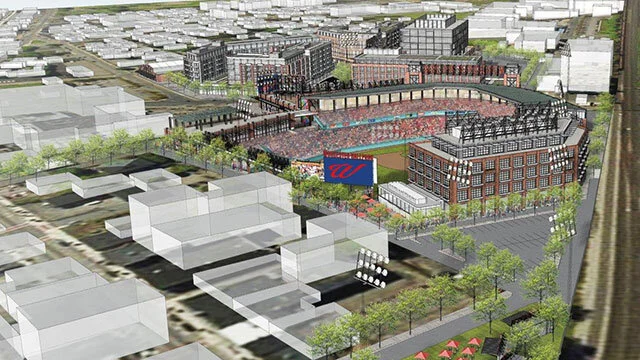
Worcester woos Sox from Pawtucket: Boston affiliate announces intent to move to Massachusetts
Worcester, Massachusetts, hasn't hosted a Minor League team since the 1930s. That may soon change. On Friday afternoon, the city of Worcester and the Pawtucket Red Sox announced their intent to relocate the International League club to the central Massachusetts city. This would end […]
By Benjamin Hill
August 17, 2018, at 4:15pm
Worcester, Massachusetts, hasn't hosted a Minor League team since the 1930s. That may soon change.
On Friday afternoon, the city of Worcester and the Pawtucket Red Sox announced their intent to relocate the International League club to the central Massachusetts city. This would end Pawtucket's long run as the home of Boston's Triple-A affiliate, which has called McCoy Stadium home since 1973.
The PawSox have been trying to find a replacement for 77-year-old McCoy Stadium since 2015, when an ownership group headed by former Boston Red Sox CEO Larry Lucchino took over the team. An initial attempt to finance a ballpark on the Providence, Rhode Island waterfront was unsuccessful, leading to a protracted years-long effort to work out an alternate stadium deal that would keep the team in Rhode Island. Concurrently, PawSox ownership made it known that in the absence of a new ballpark they would be willing to relocate.
Enter Worcester. On Friday, Lucchino signed a Letter of Intent with city officials to "build an innovative downtown ballpark...that would be scheduled to open in 2021." Speaking at Worcester City Hall, Lucchino revealed that the team had reached an agreement with Worcester-based Polar Beverages and would thus be named "Polar Park." A name change will accompany the move as well, with "Woo Sox" considered a strong possibility. During his remarks Friday, Lucchino acknowledged "Woo Sox" as a front-runner but did not state definitively that that would be the name.
Polar Park, which has not yet been designed, will be located in Worcester's Canal District and serve as the centerpiece of a larger "live, work, play" development project featuring retail, hotels, office space and residential living.The commonwealth of Massachusetts has committed $35 million over the next two to three years to be devoted to the infrastructural needs of this public-private partnership. Per the Boston Globe, "the city of Worcester will own the stadium and borrow $100 million to finance its construction. The bonds would be paid off by rent from the baseball team, and by a special taxation distrcit the city will create to capture business activity in the surrounding area."
The project is still subject to the approval of Worcester City Council -- which needs to okay the city's financial contribution -- as well as the International League, Minor League and Major League Baseball. Worcester, located in central Massachusetts, is situated approximately 40 miles north of Pawtucket.
Friday's announcement, described by city officials as the culmination of a 12-month courtship and occurring some three years after Worcester first contacted the team, took place at Worcester's City Hall. It was a boisterous, standing room-only affair, attended by prominent state and city officials, business leaders and PawSox executives.
Lucchino said that the decision to relocate was a simple matter of "you go where you're wanted."
"We felt an enormous sense of welcome and civic pride and we have felt that...the people of Worcester and the people of Massachusetts will welcome us with open arms," said Lucchino. "This has been a tough process...but we look forward to buckling up and having a hell of a ride with Worcester, Massachusetts and this grand ballpark."
The City of Pawtucket seemed to be caught off guard by the announcement.
"The City of Pawtucket continued to have what was thought to be ongoing productive conversations with the PawSox as recently as Wednesday evening," said communications director Wil Arboleda in a statement.
The PawSox are slated to play two more seasons at McCoy Stadium, which opened in 1942. Its place in baseball history is assured, as in 1981 it hosted the longest professional baseball game ever played. That contest, against the Rochester Red Wings, took 33 innings to complete.
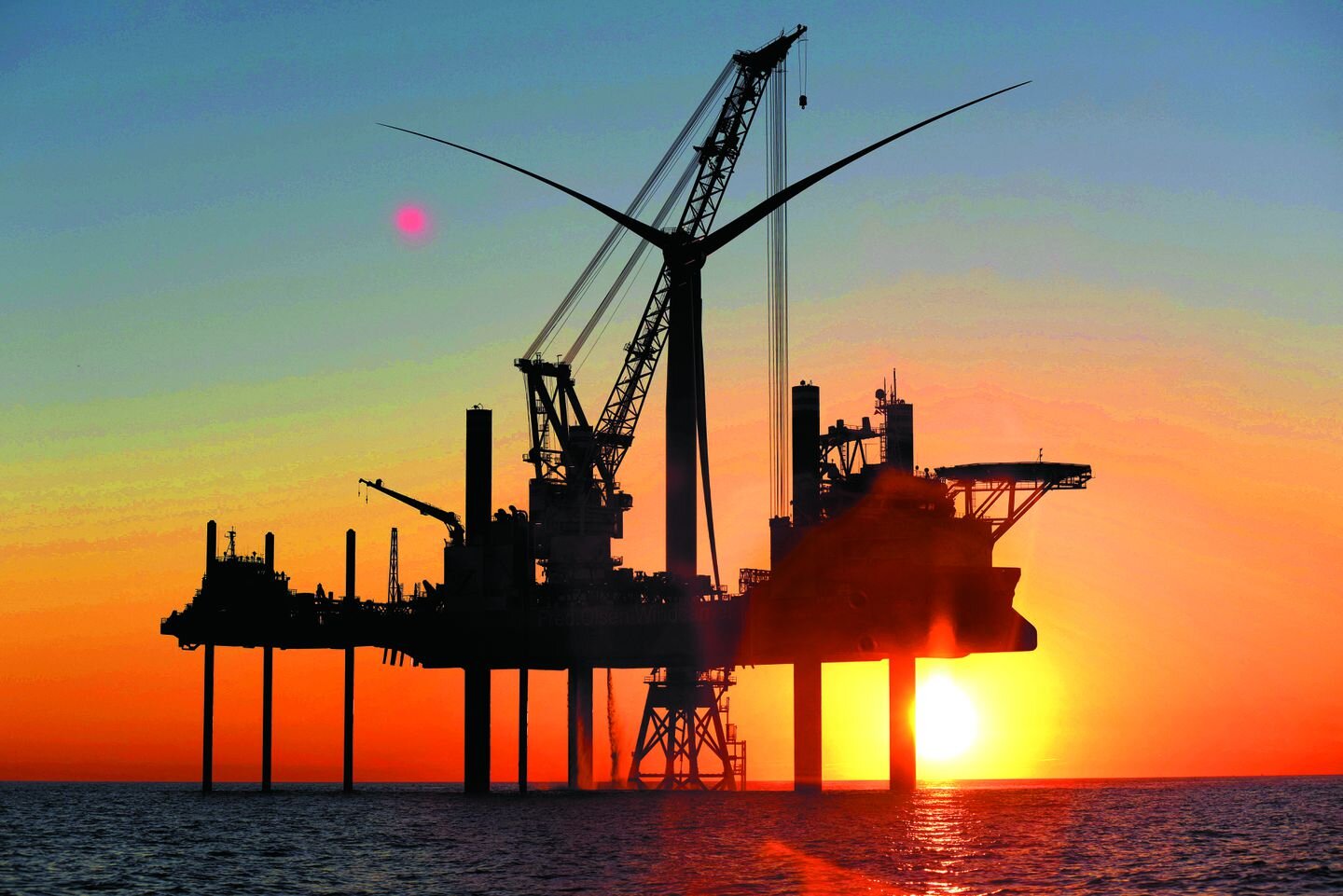
Boston Globe: Vineyard Wind has a big selling point for its power: cheaper prices
The first major offshore wind farm to be built off New England’s coast has at least one big selling point, compared to the doomed Cape Wind project that preceded it: much cheaper electricity.
By Jon Chesto GLOBE STAFF
AUGUST 14, 2018
Image by DEEPWATER WIND
The first major offshore wind farm to be built off New England’s coast has at least one big selling point, compared to the doomed Cape Wind project that preceded it: much cheaper electricity.
The new project, known as Vineyard Wind, is slated to begin construction next year, some 15 miles south of Martha’s Vineyard. Vineyard Wind has generated less opposition than Cape Wind, which succumbed to years of litigation because of its proposed location in Nantucket Sound, as close as six miles to shore.
Cape Wind’s high prices fueled some of the opposition, but that apparently won’t be a problem for Vineyard Wind.
The state’s three investor-owned electric utilities recently disclosed that they will pay Vineyard Wind about $89 a megawatt hour, on average, over the course of a 20-year contract for the first phase of the project, scheduled to come online in 2021.
A second phase would cost less, an average of $79 per megawatt hour.
“I’m somewhat speechless at that number,” said Paul Flemming, managing director at ESAI Power LLC, an energy consultancy in Wakefield. “We’ve seen numbers like that in Europe. But they’ve got the infrastructure set up [already].”
Those prices are roughly one-third the rate of what the Cape Wind project would have charged, and at least half the cost of more recent offshore wind contracts in the United States. They are also about one-fourth the rate charged by Deepwater Wind’s Block Island project, a much smaller installation with just five turbines. It’s the country’s first offshore wind farm.
It’s hard to predict precisely how the Vineyard Wind contracts will translate into electric bills for homeowners, because the wholesale power markets fluctuate over time. But the state Department of Energy Resources says it sees the potential for modest savings to ratepayers over the life of the 20-year contracts.
So what gives? How is Vineyard Wind able to deliver such a better price, when its 800-megawatt wind farm would be located farther out to sea, in deeper waters, than Cape Wind’s? Many factors make offshore wind more financially viable now than it was a decade ago:
■ Competition: Cape Wind was the only game in town when National Grid signed a contract in 2010 at prices that began at $187 per megawatt hour, and escalated from there. Eversource signed a similar deal, but both utilities backed out when Cape Wind ran into trouble lining up financing.
In contrast, there were three development teams offering to sell off-shore power to the state’s electric utilities in a bidding process set in motion by the state’s 2016 energy law. Vineyard Wind had one key advantage: It’s furthest along in the permitting process, enabling it to be the one most likely to capitalize on federal tax credits that are scheduled to expire soon.
■ Experience: As the first proposed offshore wind farm in the United States, Cape Wind was a trailblazer. But company president Jim Gordon’s experience was primarily in developing gas-fired plants, not wind farms.
Bloomberg NEF analyst Tom Harries noted that Vineyard Wind is being developed by more experienced investors: utility Avangrid and investor Copenhagen Infrastructure Partners. That experience, Harris said, is vital to managing expenses. It also lowers the perception of risk, which helps reduce financing costs.
“We had three companies that had real experience that had bid for these projects, [with] the technology and capital to build them,” said Bob Rio, an energy expert at Associated Industries of Massachusetts. “The industry matured. It caught up to what we needed.”
■ Technology: Cape Wind had proposed using 3.6-megawatt turbines, at the time considered cutting edge. Now, though, offshore turbines are bigger and more powerful. General Electric, for example, recently announced plans to make a 12-megawatt turbine. Vineyard Wind will use either 8- or 10-megawatt turbines.
Plus, the more advanced technology seen already in Europe allows wind farms to be built in deeper waters, enabling them to harness stronger winds. That means Vineyard Wind’s 80 to 100 turbines will run more efficiently, more frequently approaching peak capacity.
“Our price is more of a reflection of where the global market has moved,” said Lars Thaaning Pedersen, Vineyard Wind’s chief executive.
■ Financing: It’s a minor twist, but worth noting. Cape Wind could only secure 15-year contracts from utilities. These new contracts are for 20 years, which spreads costs over a longer period.
■ Opposition: Because its turbines will be larger, Vineyard Wind can be built farther from shore. Vineyard Wind does have issues — fishermen are concerned about the towers’ impact, and Yarmouth residents worry about a transmission line that’s proposed to come ashore in their town.
But Cape Wind would have been in sight of a far more populous area, and was ensnared by years of costly legal appeals. It’s hard to know how much of a role, if any, that played in its price for electricity. But the opposition eventually sank that project, while Vineyard Wind has been generating much more support.
Jon Chesto can be reached at jon.chesto@globe.com. Follow him on Twitter @jonchesto.